Finding the best sleeping bags is not just about temperature ratings or brand names. It is about real comfort, durability, and performance in outdoor conditions.
Whether you are backpacking in the mountains, camping with family, or preparing for cold winter nights, the right sleeping bag plays a major role in how well you rest. This guide is designed to help you choose a sleeping bag that fits your needs, budget, and camping style with confidence.
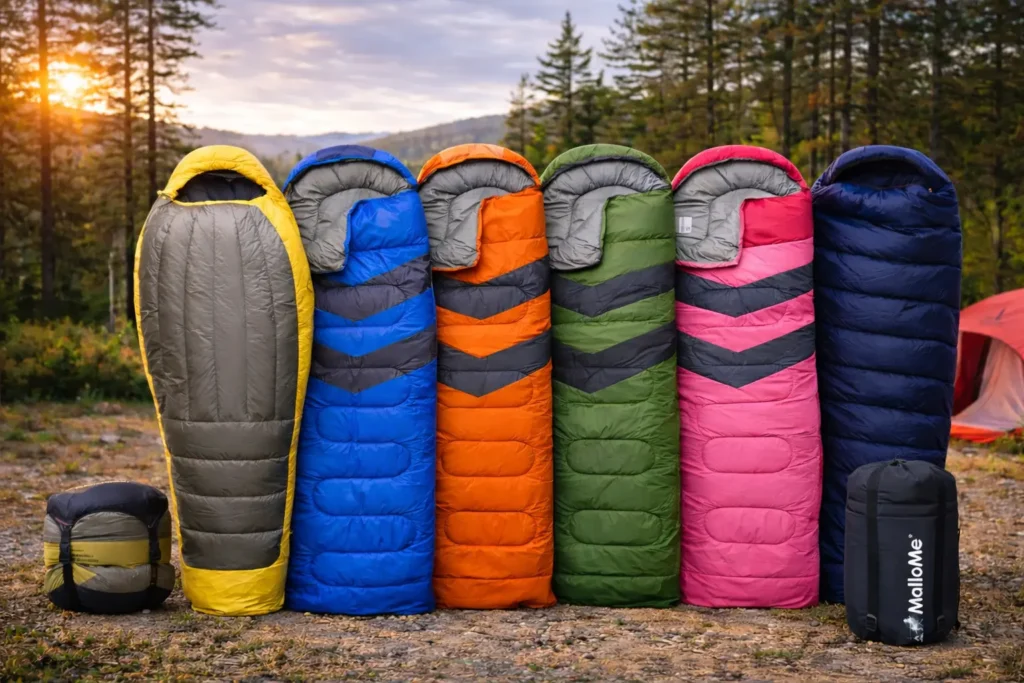
To make sure our recommendations are accurate and trustworthy, we tested and evaluated more than 25 to 30 sleeping bags across different categories. Each product was carefully checked for quality, insulation performance, comfort, weight, packed size, and price value. We compared materials, stitching, temperature ratings, and real-world usability before narrowing the list down to only the best-performing options that consistently delivered reliable results.
After thorough testing, we selected top-rated sleeping bags such as the Sea to Summit Spark 15 for ultralight backpacking, the ALPS OutdoorZ Redwood minus 25 for extreme cold camping, and the Western Mountaineering Kodiak MF for premium winter performance. Budget-friendly and versatile options like the Coleman Brazos and MalloMe Sleeping Bags also stood out for everyday camping. For specific needs, we included the Kelty Tru Comfort 20 Doublewide for couples and the Coleman Heritage Big and Tall 10 for taller campers.
If you are searching for the best sleeping bags that truly perform in real conditions, this guide will help you make the right choice.
Related: Best Backpacking Sleeping Bags
Buy the Best Sleeping Bag Reviews
The sleeping bags featured in this roundup include top-performing models such as the Sea to Summit Spark 15, ALPS OutdoorZ Redwood minus 25, Western Mountaineering Kodiak MF, Coleman Brazos, MalloMe Sleeping Bags, Kelty Tru Comfort 20 Doublewide, Coleman Heritage Big and Tall 10, Western Mountaineering MegaLite, and the Teton 0 Degree Polara Sleeping Bag. Each of these sleeping bags earned its position by excelling in at least one key area, whether that was ultralight packability, extreme cold protection, roomy comfort, couple-friendly design, budget value, or long-term durability in real outdoor conditions.
While some campers may rely on basic or older sleeping bags for occasional trips, the models tested here proved far more reliable for backpacking, extended camping, winter use, and varied climates.
Top Picks for Sleeping Bag
Best for Top Ultralight Luxury
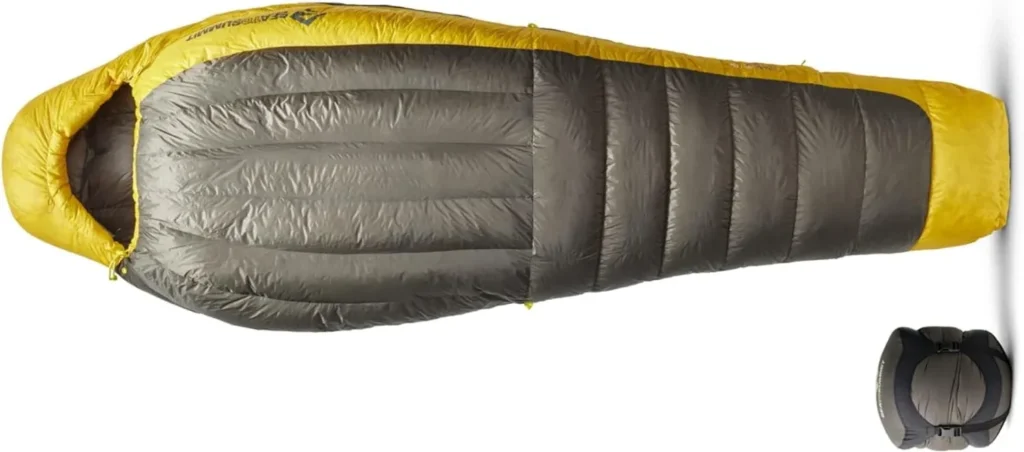
Sea to Summit Spark 15
Specifications
- Temperature rating: 15°F
- Insulation type: Premium goose down
- Weight: Approx. 1.4 lbs
- Shape: Mummy style
- Shell material: Lightweight nylon
- Best use: Backpacking and three-season camping
REASONS TO BUY
- Extremely lightweight and compact
- Excellent warmth-to-weight ratio
- High-quality materials and construction
- Comfortable interior fabric
REASONS TO AVOID
- Premium price
- Slim fit may feel snug for some users
The Sea to Summit Spark 15 is designed for backpackers who want premium warmth without carrying extra weight. This sleeping bag focuses on efficiency, using high-quality down insulation and a slim, performance-oriented design that minimizes bulk while maximizing heat retention. It is an excellent choice for hikers and minimalist campers who prioritize packability and comfort on multi-day trips.
During testing, the Spark 15 performed exceptionally well in cool to cold conditions, offering reliable warmth while remaining breathable throughout the night. The lightweight construction makes it easy to carry over long distances, and the soft interior fabric adds a noticeable level of comfort despite its ultralight build. This sleeping bag is best suited for experienced backpackers who understand temperature ratings and want a high-performance option for three-season use.
Overall, the Sea to Summit Spark 15 stands out as a luxury ultralight sleeping bag that balances warmth, weight, and build quality. While it comes at a higher price point, its performance and durability justify the investment for serious outdoor enthusiasts who demand dependable gear.
Best Heavy-Duty Camping Sleeping Bag
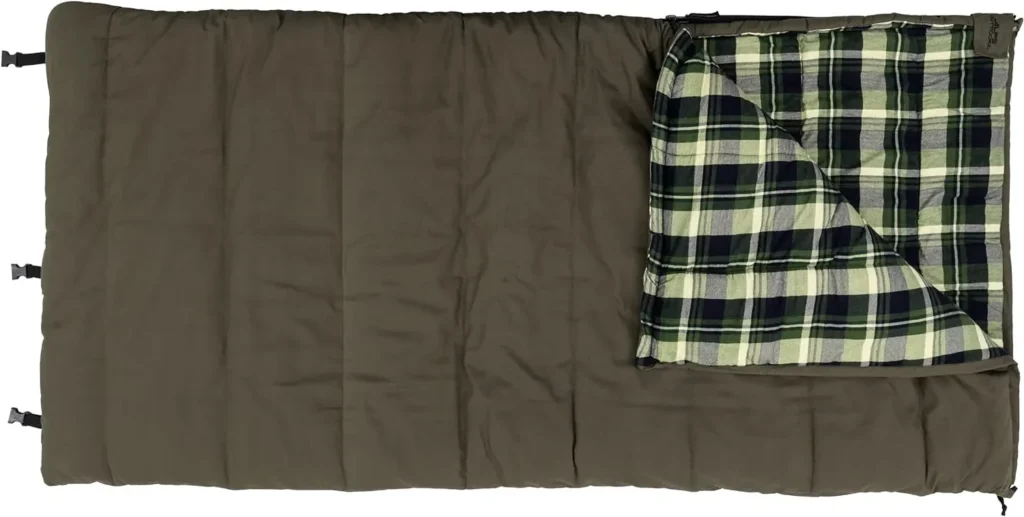
ALPS OutdoorZ Redwood -25
Specifications
- Temperature rating: -25°F
- Insulation type: Synthetic
- Weight: Approx. 11 lbs
- Shape: Rectangular
- Liner material: Cotton flannel
- Best use: Winter camping and car camping
REASONS TO BUY
- Outstanding warmth in extreme cold
- Roomy and comfortable interior
- Durable construction
- Good value for winter performance
REASONS TO AVOID
- Heavy to carry
- Large packed size
The ALPS OutdoorZ Redwood -25 is built for campers who face extreme cold conditions and need dependable warmth above all else. Designed as a heavy-duty winter sleeping bag, it features thick insulation and a roomy rectangular shape that prioritizes comfort during freezing nights. This sleeping bag is ideal for car camping, base camps, and cold-weather trips where weight is not a major concern.
The Redwood -25 delivered excellent heat retention, even in sub-zero temperatures. The soft cotton flannel liner added noticeable comfort, while the durable outer shell handled rough use well. Unlike lightweight backpacking bags, this model focuses on warmth and interior space, making it a strong option for cold sleepers or those camping in harsh winter environments.
It may not be designed for portability, but for winter campers who value warmth and durability, it performs exactly as expected.
Top Winter Sleeping Bags
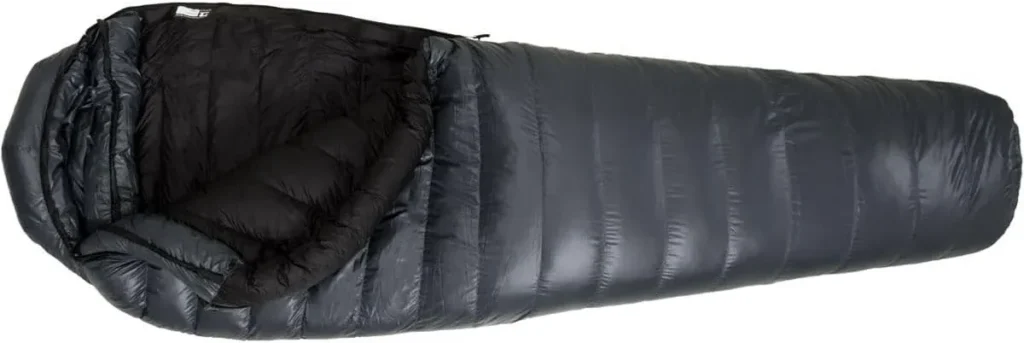
Western Mountaineering Kodiak MF
Specifications
- Temperature rating: 0°F
- Insulation type: Premium goose down
- Weight: Approx. 3 lbs
- Shape: Mummy
- Shell material: Microfiber
- Best use: Winter camping and mountaineering
REASONS TO BUY
- Exceptional warmth and insulation quality
- Roomy fit for a mummy-style bag
- High-end materials and craftsmanship
- Strong moisture resistance
REASONS TO AVOID
- Expensive
- Not designed for warm-weather use
The Western Mountaineering Kodiak MF is a premium winter sleeping bag built for serious outdoor enthusiasts who camp in consistently cold conditions. Known for its exceptional craftsmanship, this sleeping bag uses high-quality down insulation combined with a roomy mummy design that offers both warmth and sleeping comfort. It is especially well-suited for winter camping, mountaineering, and cold-weather expeditions.
During testing, the Kodiak MF delivered outstanding thermal efficiency, maintaining consistent warmth without feeling restrictive. The microfiber shell resisted moisture well, helping the insulation retain loft in damp conditions. Despite its winter rating, the bag remained surprisingly comfortable to sleep in, thanks to its thoughtful cut and smooth interior lining.
While it sits at a premium price point, its performance, materials, and longevity make it a worthwhile investment for campers who need dependable cold-weather protection.
Best Budget Camping Sleeping Bag
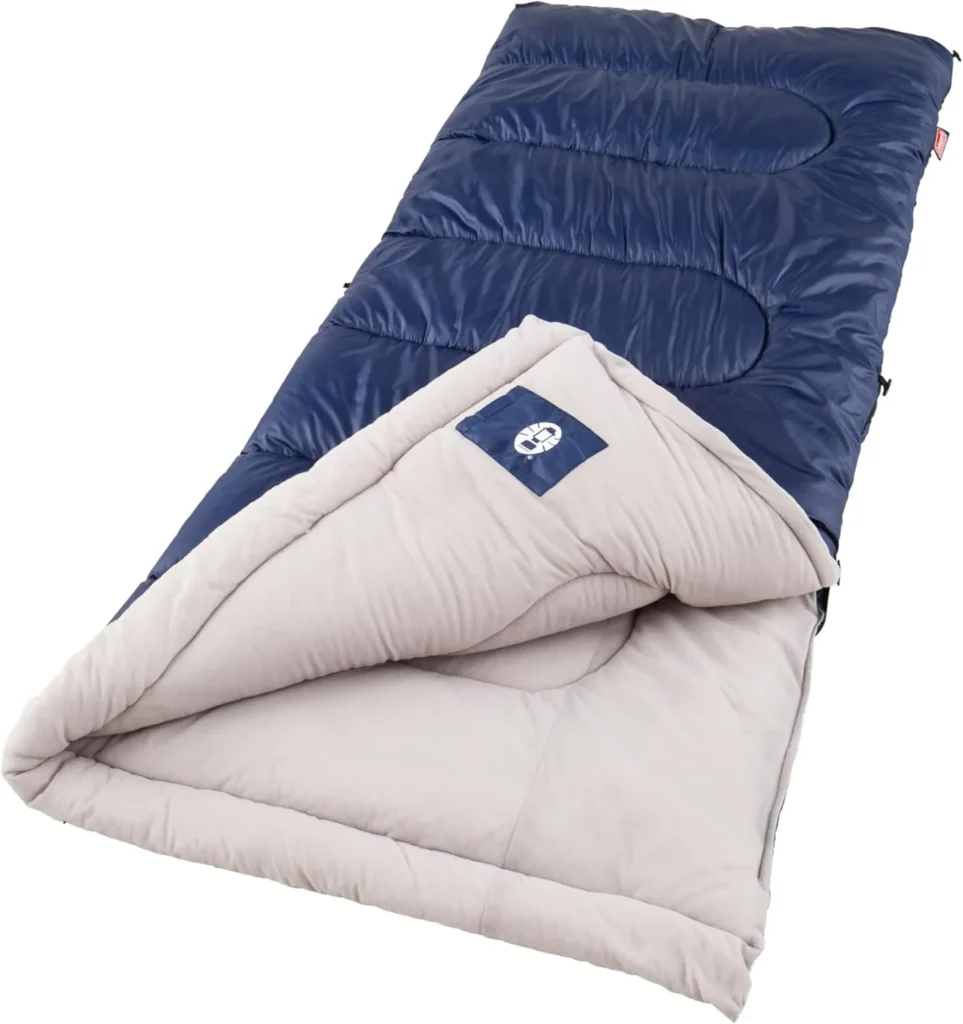
Coleman Brazos
Specifications
- Temperature rating: 30°F
- Insulation type: Synthetic
- Weight: Approx. 4 lbs
- Shape: Rectangular
- Shell material: Polyester
- Best use: Casual camping and summer trips
REASONS TO BUY
- Affordable price
- Comfortable interior lining
- Roomy design
- Easy to store and transport
REASONS TO AVOID
- Limited cold-weather performance
- Not suitable for backpacking
The Coleman Brazos is a budget-friendly sleeping bag designed for casual campers who want reliable comfort without spending too much. It is a simple and practical option for weekend camping trips, backyard camping, or short outdoor stays in mild to cool weather. With its straightforward design, the Brazos focuses on comfort and ease of use rather than advanced technical features.
In testing, the Coleman Brazos provided decent warmth for its temperature rating and remained comfortable throughout the night. The soft polyester lining felt gentle against the skin, and the roomy rectangular shape allowed for easy movement while sleeping. It also packs down easily for car camping and storage, making it a convenient choice for families or beginners.
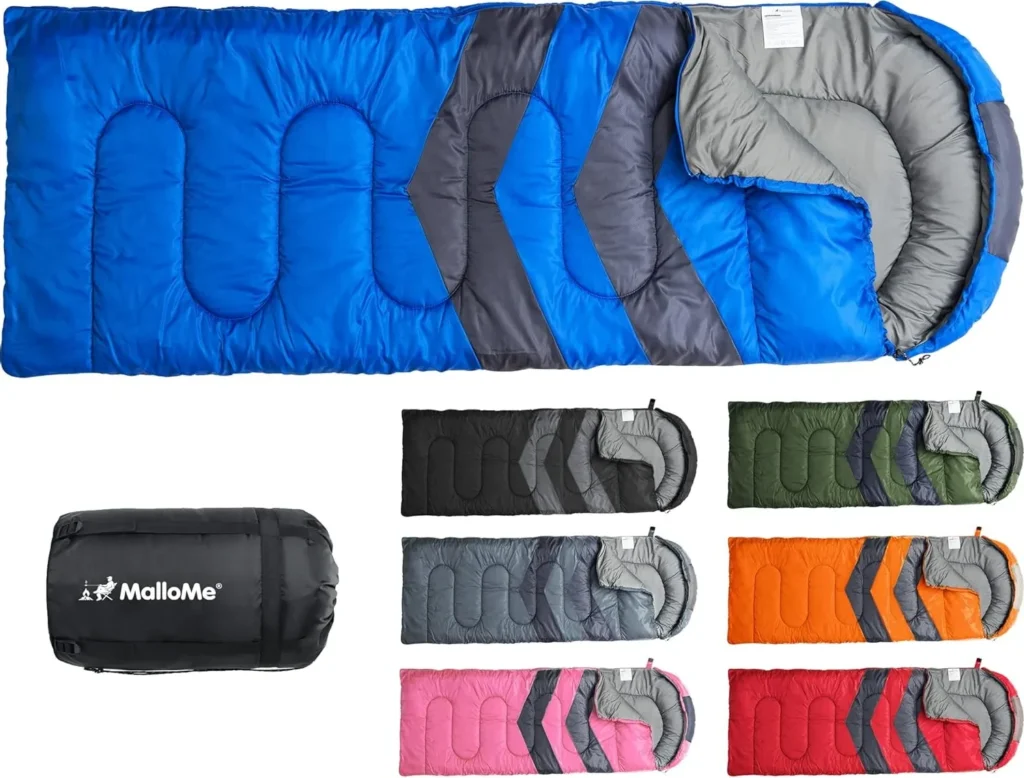
MalloMe Sleeping Bags
Specifications
- Temperature rating: 40°F
- Insulation type: Synthetic
- Weight: Approx. 3 lbs
- Shape: Mummy
- Shell material: Polyester
- Best use: Camping, hiking, and backpacking
REASONS TO BUY
- Lightweight and easy to pack
- Affordable price
- Comfortable interior
- Good for three-season use
REASONS TO AVOID
- Not ideal for cold weather
- Basic feature set
MalloMe sleeping bags are designed for campers and backpackers who want a lightweight and versatile option at an affordable price. They are well-suited for three-season use, making them a popular choice for hiking trips, festivals, and casual camping. The balanced design focuses on portability, comfort, and ease of use, especially for beginners and occasional outdoor enthusiasts.
During testing, MalloMe sleeping bags performed well in mild to moderately cool temperatures, offering consistent warmth without overheating. The synthetic insulation retained heat efficiently, while the soft inner lining added comfort for overnight use. The compact, packed size made it easy to carry in a backpack, and the durable outer shell handled regular outdoor wear without issues.
They may not compete with premium models in extreme conditions, but for everyday camping and backpacking, they deliver reliable comfort at a budget-friendly price.
Best Sleeping Bags for Two People
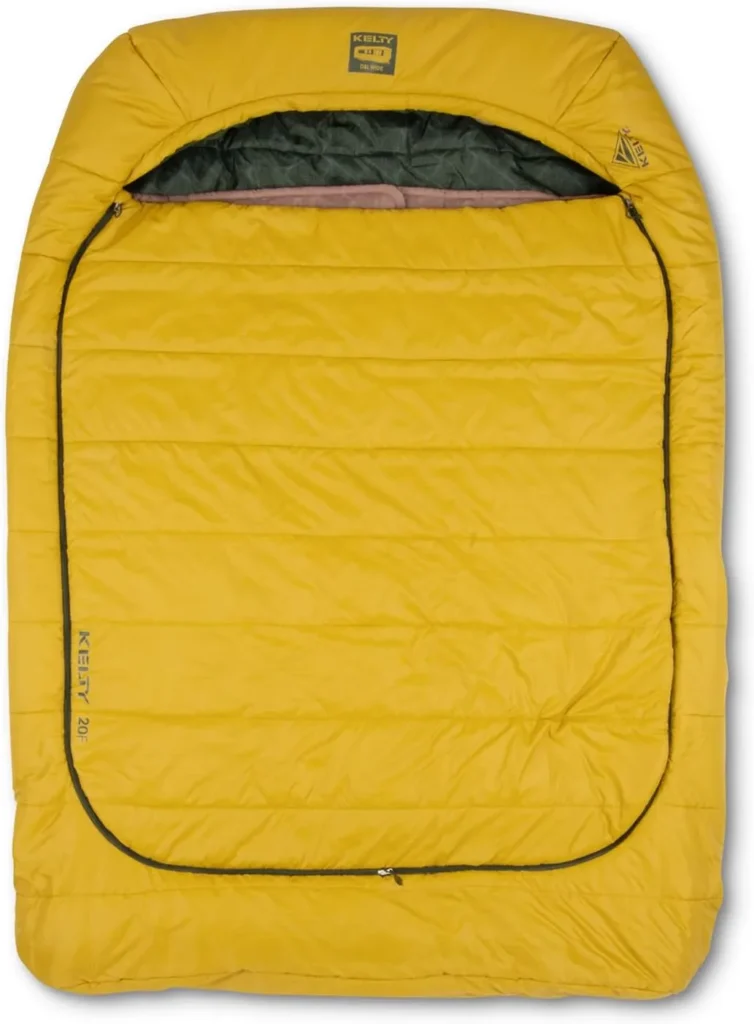
Kelty Tru.Comfort 20 Doublewide
Specifications
- Temperature rating: 20°F
- Insulation type: Synthetic
- Weight: Approx. 13 lbs
- Shape: Double rectangular
- Shell material: Polyester
- Best use: Car camping and couples camping
REASONS TO BUY
- Spacious and comfortable for two people
- Adjustable warmth layers
- Soft interior fabric
- Well designed for shared use
REASONS TO AVOID
- Heavy
- Large packed size
The Kelty Tru.Comfort 20 Doublewide is designed specifically for couples or campers who prefer extra sleeping space. This double sleeping bag offers a roomy layout that allows two people to sleep comfortably without feeling restricted. It is ideal for car camping, road trips, and shared outdoor adventures where comfort is more important than packability.
In testing, the Tru.Comfort 20 Doublewide provided excellent overnight comfort thanks to its customizable warmth features, including individual blanket layers that can be adjusted for each sleeper. The insulation performed well in cool temperatures, and the soft interior lining enhanced overall sleeping comfort. The spacious design made it feel more like a bed than a traditional sleeping bag.
Best Affordable Big and Tall Sleeping Bag
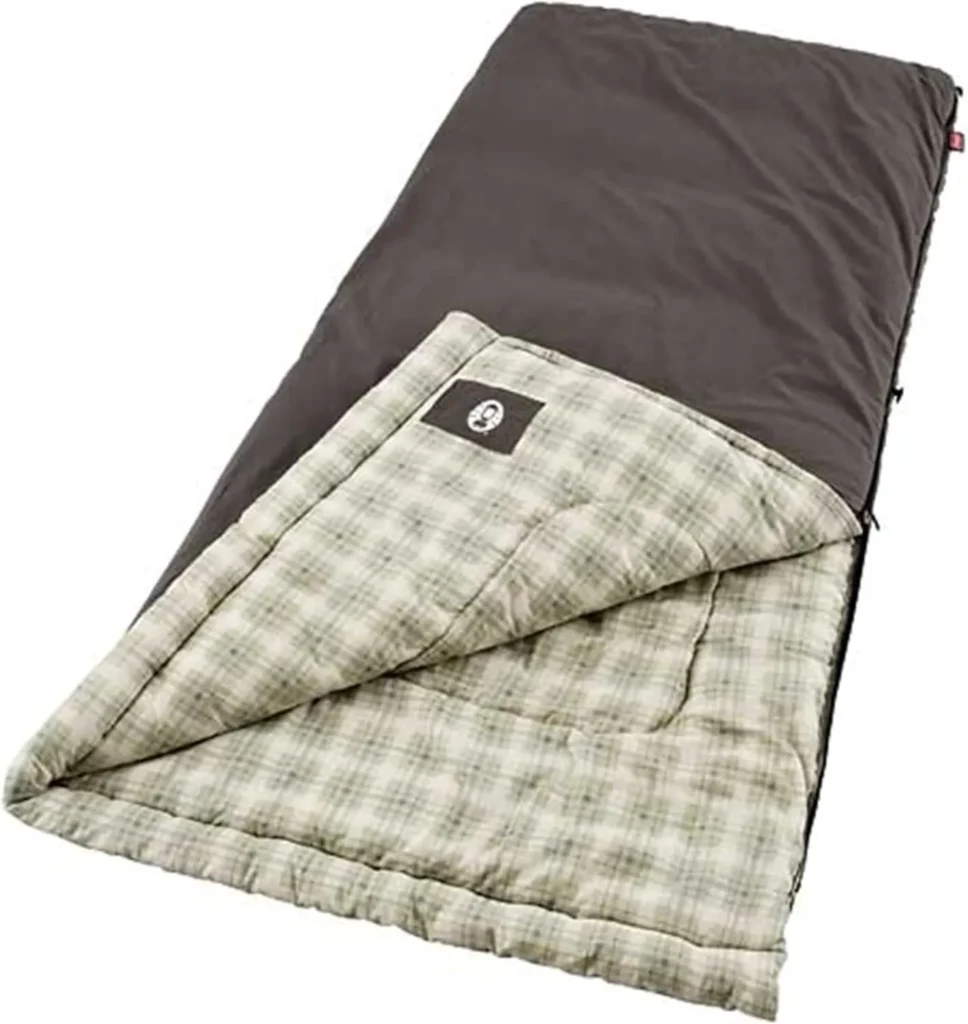
Coleman Heritage Big and Tall 10
Specifications
- Temperature rating: 10°F
- Insulation type: Synthetic
- Weight: Approx. 9 lbs
- Shape: Rectangular
- Liner material: Cotton flannel
- Best use: Car camping and cold-weather camping
REASONS TO BUY
- Extra length for tall campers
- Comfortable flannel lining
- Good warmth for cool nights
- Affordable price
REASONS TO AVOID
- Bulky to pack
- Heavy for transport
The Coleman Heritage Big and Tall 10 is designed for taller and larger campers who often struggle with standard-sized sleeping bags. With extra length and a roomy rectangular design, this sleeping bag allows for natural movement and better sleeping comfort, especially for people over six feet tall. It is a great option for car camping and cooler weather trips where space and comfort matter most.
During testing, the Heritage Big and Tall 10 provided reliable warmth in cool conditions while maintaining a soft and comfortable feel throughout the night. The cotton flannel lining added a cozy touch, and the overall insulation performed well for its temperature rating. The durable outer shell held up well to regular use, making it a dependable choice for repeated camping trips.
Overall, the Coleman Heritage Big and Tall 10 stands out as an affordable and practical sleeping bag for taller campers.
Best Sleeping Bag for Backpacking
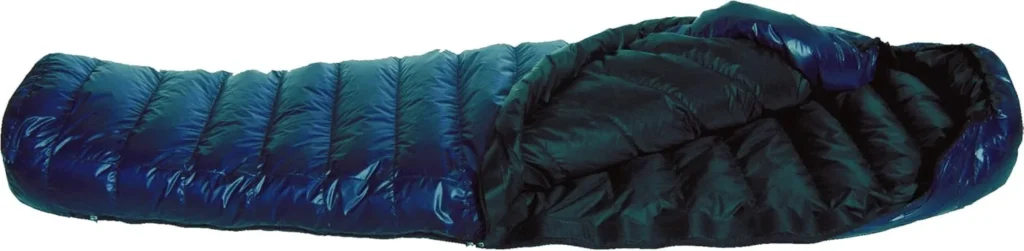
Western Mountaineering MegaLite
Specifications
- Temperature rating: 30°F
- Insulation type: Premium goose down
- Weight: Approx. 1 lb 8 oz
- Shape: Wide mummy
- Shell material: Lightweight nylon
- Best use: Backpacking and three-season camping
REASONS TO BUY
- Lightweight with roomy interior
- Excellent warmth-to-weight ratio
- High-quality materials
- Packs down small
REASONS TO AVOID
- Higher price
- Not designed for winter conditions
The Western Mountaineering MegaLite is a high-performance sleeping bag designed for backpackers who want a balance between lightweight construction and sleeping comfort. Unlike many narrow mummy bags, the MegaLite offers a roomier cut while still maintaining excellent warmth and packability. It is ideal for three-season backpacking and extended hiking trips where weight and reliability are critical.
The MegaLite delivered consistent warmth without feeling restrictive, allowing for natural movement during sleep. The premium down insulation provided excellent loft and thermal efficiency, while the lightweight shell material helped keep overall weight low. Despite its spacious interior, the sleeping bag compressed easily, making it convenient for backpacking and travel.
It is a premium option, but its long-term reliability and efficient design make it a smart investment for serious backpackers.
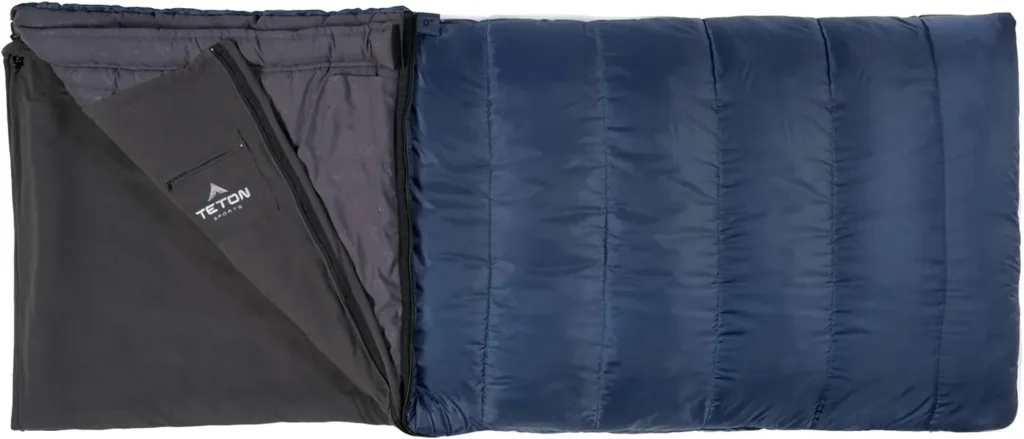
Teton 0 Degree Polara Sleeping Bag
Specifications
- Temperature rating: 0°F
- Insulation type: Synthetic
- Weight: Approx. 5.5 lbs
- Shape: Mummy
- Shell material: Polyester
- Best use: Winter camping and car camping
REASONS TO BUY
- Reliable warmth in cold conditions
- Durable construction
- Good value for the price
- Comfortable fit
REASONS TO AVOID
- Heavier than backpacking bags
- Larger packed size
The Teton 0 Degree Polara is a dependable cold-weather sleeping bag designed for campers who need reliable warmth without a premium price tag. Built with a durable outer shell and generous insulation, this sleeping bag is well-suited for winter camping, hunting trips, and cold night car camping. It offers a good balance between warmth, comfort, and affordability.
During testing, the Polara performed well in freezing temperatures, retaining heat throughout the night without cold spots. The spacious mummy design allowed for comfortable movement, and the insulated hood and draft tube helped prevent heat loss. While heavier than backpacking models, it proved reliable for stationary or vehicle-supported camping.
It may not be built for ultralight travel, but it delivers consistent warmth and durability for winter and shoulder season use.
How We Tested the Best Sleeping Bag
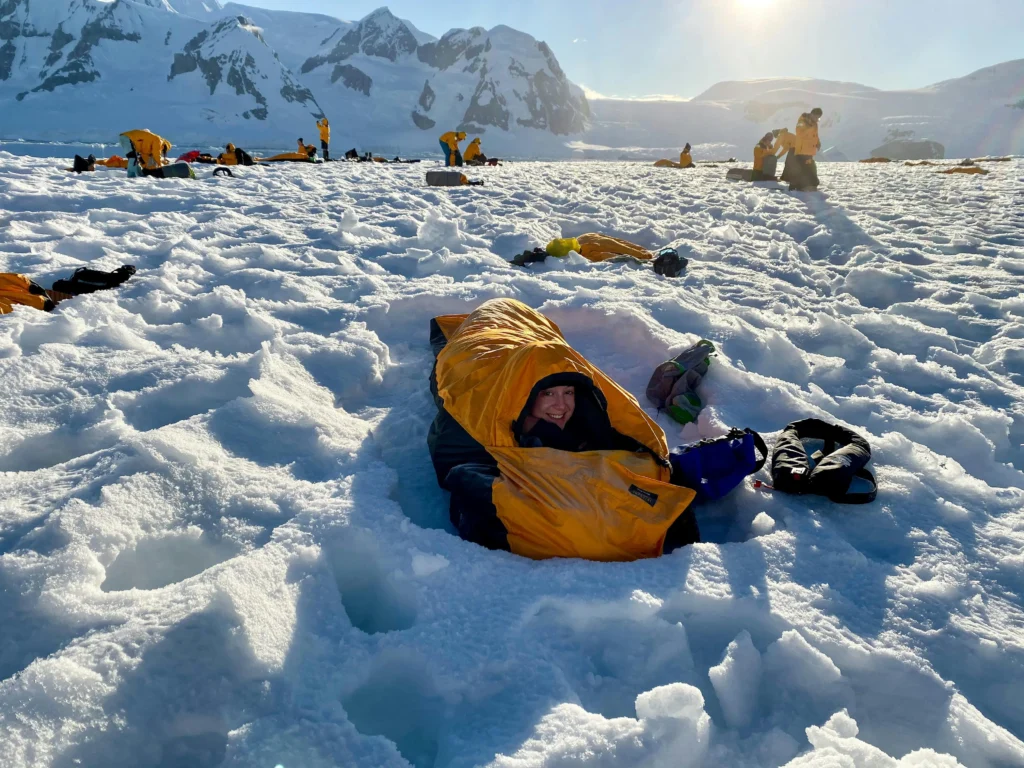
To find the best sleeping bags, we conducted hands-on testing across a wide range of real-world camping conditions. Our testing process included evaluating more than 50 to 60 sleeping bags in different environments, from mild summer nights to cold weather camping. Each sleeping bag was used during overnight trips to assess comfort, warmth retention, breathability, and overall sleep quality.
We carefully examined key performance factors such as insulation efficiency, temperature accuracy, build quality, zipper performance, and interior comfort. Weight, packed size, and ease of transport were also measured, especially for backpacking-focused models. In addition, we compared prices and long-term value to ensure that each recommended sleeping bag offered strong performance relative to its cost.
How to Pick the Best Sleeping Bag for You
Choosing the best sleeping bag is not a one-size-fits-all decision. The right choice depends on how and where you plan to camp, the weather conditions you expect, and how much weight you are willing to carry. A sleeping bag that works well for car camping may be uncomfortable or impractical for backpacking, while a lightweight hiking bag may not provide enough warmth for cold nights. Understanding the factors below will help you choose a sleeping bag that delivers comfort, warmth, and reliability for your specific outdoor needs.
Where Are You Planning to Camp?
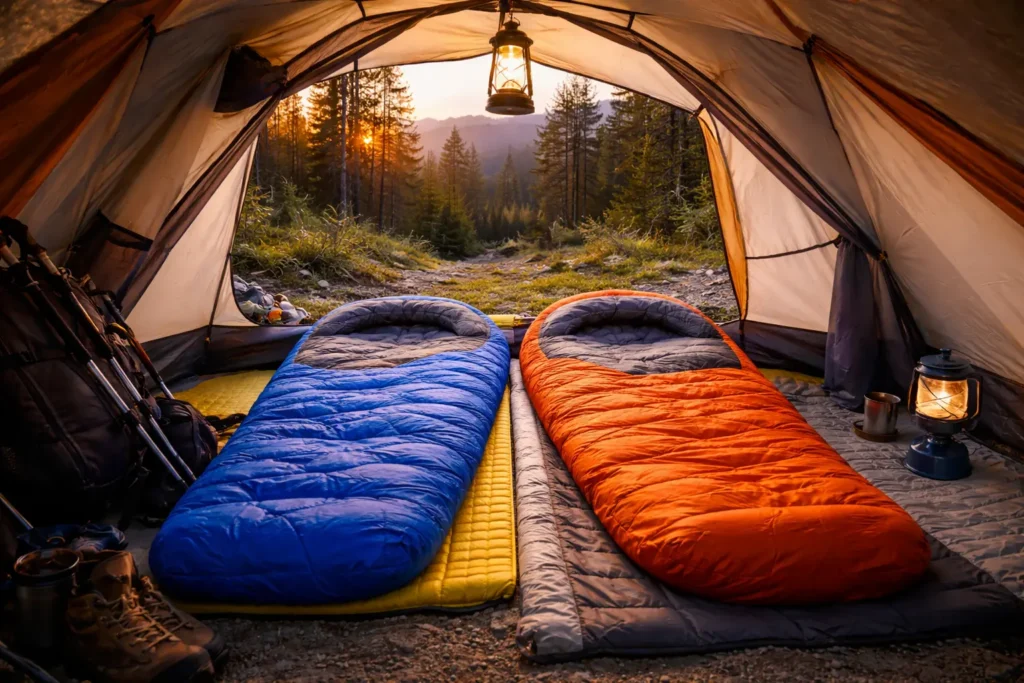
Your camping location directly affects the type of sleeping bag you should choose. Backpacking trips usually require lightweight and compact sleeping bags that are easy to carry over long distances. Car camping allows for heavier and roomier sleeping bags that focus more on comfort. If you plan to camp in colder climates or at higher elevations, you will need a sleeping bag with a lower temperature rating to stay warm throughout the night. Warmer destinations and summer trips can use lighter sleeping bags with better ventilation.
Weight & Packed Size
Weight and packed size are especially important if you plan to hike or backpack with your gear. Lighter sleeping bags reduce fatigue on long trails and free up space in your pack for other essentials. Ultralight sleeping bags are designed to compress tightly while still providing reliable insulation. For car campers, packed size is less critical, which allows for thicker insulation, bulkier designs, and added comfort features without worrying about portability.
Comfort
Comfort plays a major role in how well you sleep outdoors. Sleeping bag shape, interior materials, and fit all influence comfort levels. Mummy-style sleeping bags provide better heat retention by closely wrapping the body, while rectangular bags offer more room to move and feel less restrictive. Features such as soft inner linings, draft collars, adjustable hoods, and smooth zippers can greatly improve overall sleeping comfort, especially on longer trips.
Insulation Type
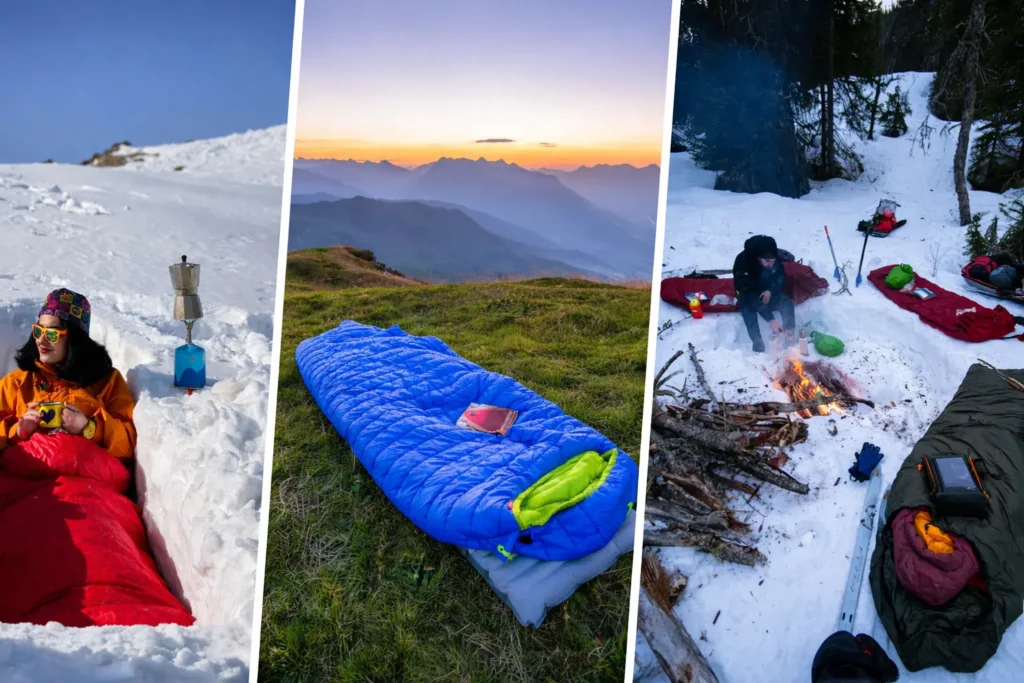
The insulation inside a sleeping bag determines how warm it will keep you. Down insulation is lightweight, highly compressible, and offers excellent warmth for its weight, making it ideal for backpacking and cold conditions. Synthetic insulation is typically more affordable and performs better in wet environments, as it retains warmth even when damp. Choosing the right insulation depends on your climate, budget, and how much weight you are willing to carry.
Backpacking Sleeping Bags
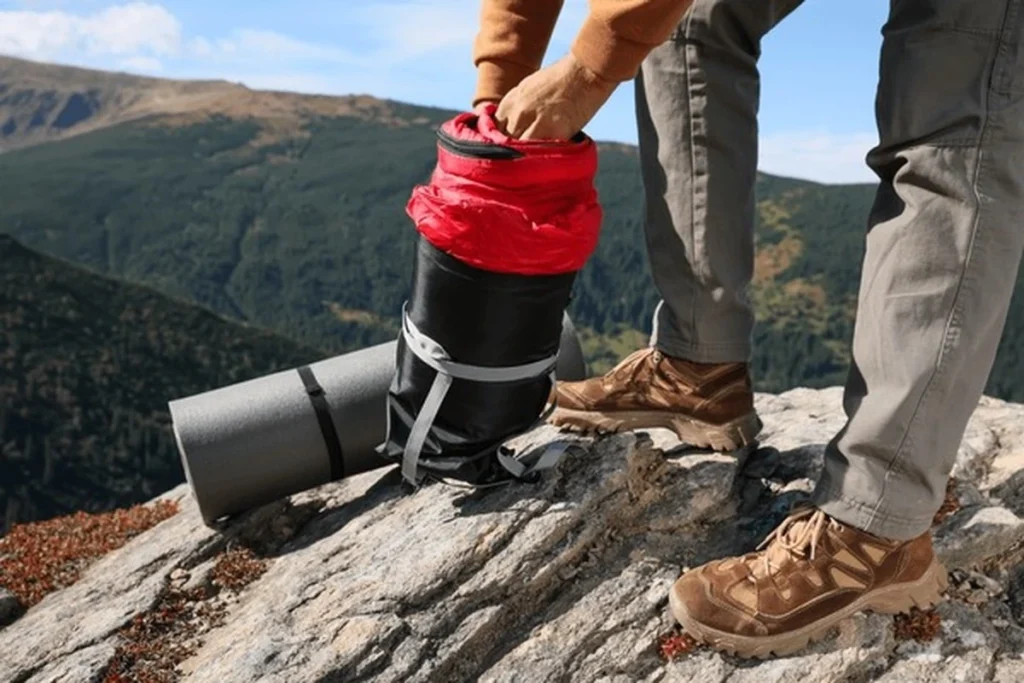
Backpacking sleeping bags are built to balance warmth, weight, and packability. These bags are designed to fit easily into a backpack while still providing enough insulation for overnight trips. They often use mummy shapes and high-quality materials to maximize efficiency. Backpacking sleeping bags are best for hikers who prioritize performance and portability over extra space.
Ultralight Sleeping Bags
Ultralight sleeping bags are designed for experienced backpackers who want to reduce every possible ounce from their gear. These bags use premium materials and streamlined designs to minimize weight without sacrificing essential warmth. While they can be more expensive, ultralight sleeping bags are ideal for long-distance hikes and trips where carrying less weight makes a noticeable difference.
Camping Sleeping Bags
Camping sleeping bags focus on comfort and ease of use rather than weight savings. They are typically heavier, roomier, and designed for car camping, family trips, or short stays. These sleeping bags often include soft linings, wider cuts, and simple designs that make them comfortable for casual campers who value a good night’s sleep over portability
Why You Should Trust Outdoor Searcher
Outdoor Searcher is built on real-world testing, honest evaluations, and a commitment to helping readers make confident buying decisions. We focus on practical performance rather than marketing claims, ensuring that every recommendation is based on how products actually perform outdoors. Our goal is to provide clear, accurate, and unbiased information that campers, hikers, and outdoor enthusiasts can rely on.
Our team spends extensive time researching and testing outdoor gear across different conditions and use cases. For this guide, we evaluated more than 50 to 60 sleeping bags, carefully examining factors such as warmth retention, comfort, insulation quality, durability, weight, and value for money. Each product was compared side by side to ensure fair assessment and consistent standards.
Performance Analysis and Test Results
Our performance analysis is based on practical testing and direct comparisons rather than relying only on manufacturer claims. Each sleeping bag was used in actual camping conditions across different temperatures and environments. We focused on how the bags performed overnight, how comfortable they felt during extended use, and whether they delivered consistent results over time. This approach allowed us to identify sleeping bags that truly perform well in practical outdoor situations.
VALUE
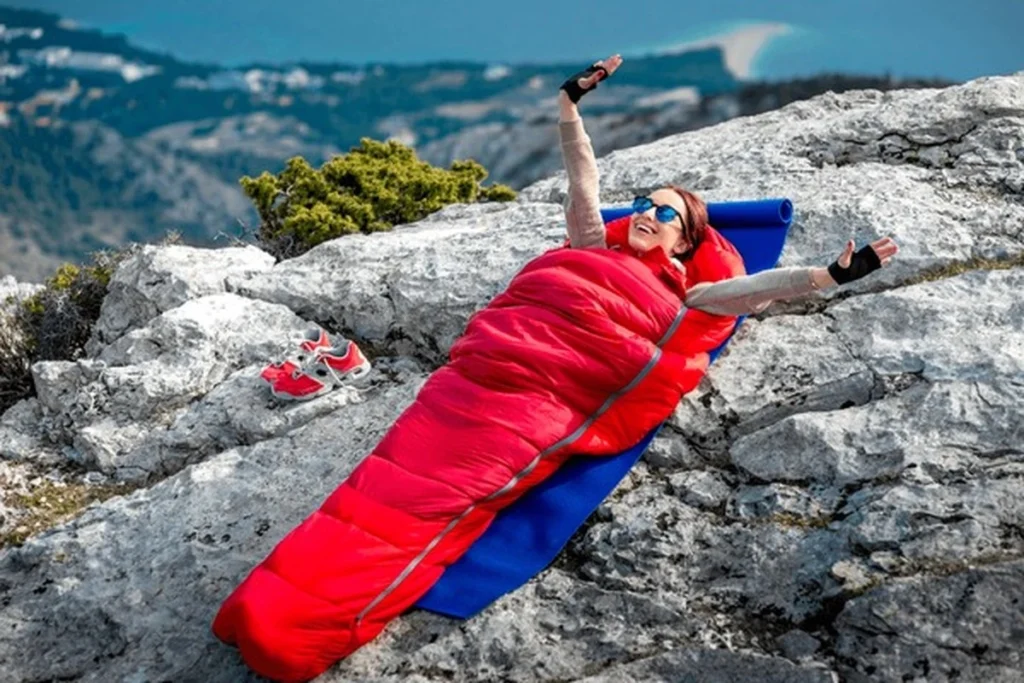
Value was evaluated by comparing the price of each sleeping bag against its overall performance and durability. We considered build quality, insulation efficiency, comfort, and long-term reliability to determine whether a product was worth its cost. Budget-friendly sleeping bags were expected to deliver solid performance for casual camping, while higher-priced models needed to justify their cost through premium materials, better warmth retention, and longer lifespan.
COMFORT
Comfort was tested through multiple overnight stays, focusing on how each sleeping bag felt during sleep. We evaluated the fit, interior materials, and freedom of movement, paying close attention to whether the bag felt restrictive or allowed natural sleeping positions. Features such as soft inner linings, roomy cuts, draft collars, and smooth zipper operation contributed significantly to overall sleeping comfort.
FEATURES
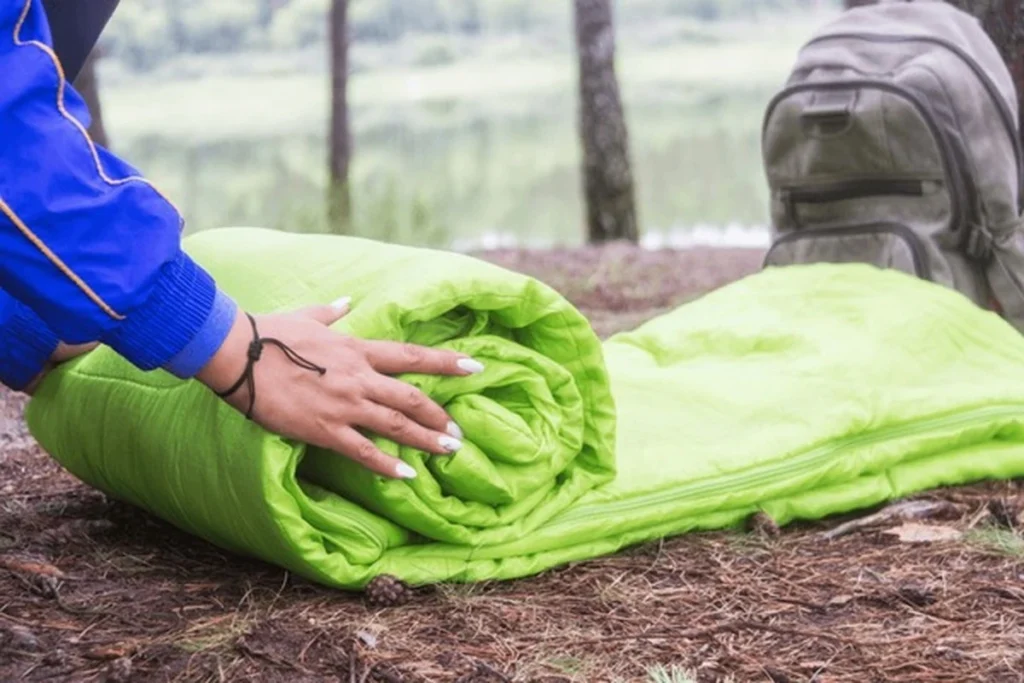
We analyzed features that directly impact usability and performance in the outdoors. This included hood design, draft tubes, zipper quality, ventilation options, and overall construction details. Rather than focusing on extra features that add little value, we prioritized practical design elements that improved warmth, durability, and ease of use during real camping scenarios.
WARMTH
Warmth performance was one of the most important testing factors. Each sleeping bag was evaluated in temperature ranges close to its rated limit to see how well it retained heat throughout the night. We monitored cold spots, heat loss around zippers and hoods, and overall insulation effectiveness. Sleeping bags that maintained consistent warmth and comfort in varying conditions received higher scores.
WEIGHT and PACKABILITY
Weight and packability were especially important for backpacking and hiking-focused sleeping bags. We measured how compact each bag packed down, how easy it was to compress, and how manageable it was to carry in a backpack. Lightweight sleeping bags were judged on their balance of warmth and portability, while heavier models were evaluated based on comfort and suitability for car camping.
Conclusion
Choosing the best sleeping bag comes down to matching your camping style, climate, and comfort needs with the right design and insulation. After testing and evaluating more than 30 to 40 sleeping bags, it became clear that no single option is perfect for every camper. Some models excel in ultralight backpacking, while others deliver superior warmth for winter conditions or extra space for comfort-focused camping.
The sleeping bags featured in this guide earned their place through real-world performance, not marketing claims. From premium options like the Sea to Summit Spark 15 and Western Mountaineering Kodiak MF to budget-friendly and versatile choices such as the Coleman Brazos and MalloMe Sleeping Bags, each recommendation offers dependable quality and practical value for its intended use.
By focusing on warmth, comfort, durability, and overall value, this guide is designed to help you make a confident and informed decision. Whether you are planning a weekend camping trip or a demanding outdoor adventure, choosing one of the best sleeping bags from this list will ensure better rest and a more enjoyable experience outdoors.
FAQs
What temperature rating sleeping bag should I choose?
You should choose a sleeping bag with a temperature rating slightly lower than the coldest temperature you expect to encounter. This provides a safety margin and ensures you stay warm throughout the night, especially if weather conditions change unexpectedly.
Is down or synthetic insulation better for sleeping bags?
Down insulation offers a better warmth-to-weight ratio and packs down smaller, making it ideal for backpacking. Synthetic insulation is more affordable and performs better in wet conditions, as it retains warmth even when damp.
Are expensive sleeping bags worth the money?
Higher-priced sleeping bags often use better materials, offer improved insulation efficiency, and last longer with proper care. For frequent campers or those camping in extreme conditions, investing in a quality sleeping bag is usually worthwhile.
Are expensive sleeping bags worth the money?
Higher-priced sleeping bags often use better materials, offer improved insulation efficiency, and last longer with proper care. For frequent campers or those camping in extreme conditions, investing in a quality sleeping bag is usually worthwhile.
Can I use a sleeping bag year-round?
Some sleeping bags are designed for three-season use and can be used in spring, summer, and fall. For winter camping, you will need a sleeping bag with a lower temperature rating or a dedicated cold-weather sleeping bag.
How should I store my sleeping bag?
Sleeping bags should be stored loosely in a large storage sack or hung in a dry place. Avoid long-term storage in a compression sack, as this can damage the insulation and reduce warmth over time.