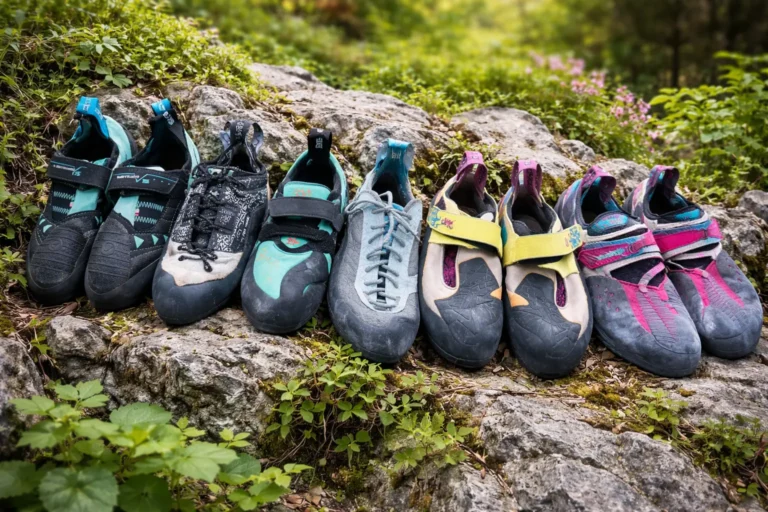
Choosing the Best Climbing Shoes can feel overwhelming because there are so many options available. To help you make a confident decision, we tested more than twenty climbing shoes.
Each pair was used on a real wall, both indoors and outdoors, so we could see how they performed in different situations. We focused on comfort, edging power, smearing ability, crack performance sensitivity, and overall durability. After checking every pair carefully, only the best shoes earned a place in our final list.
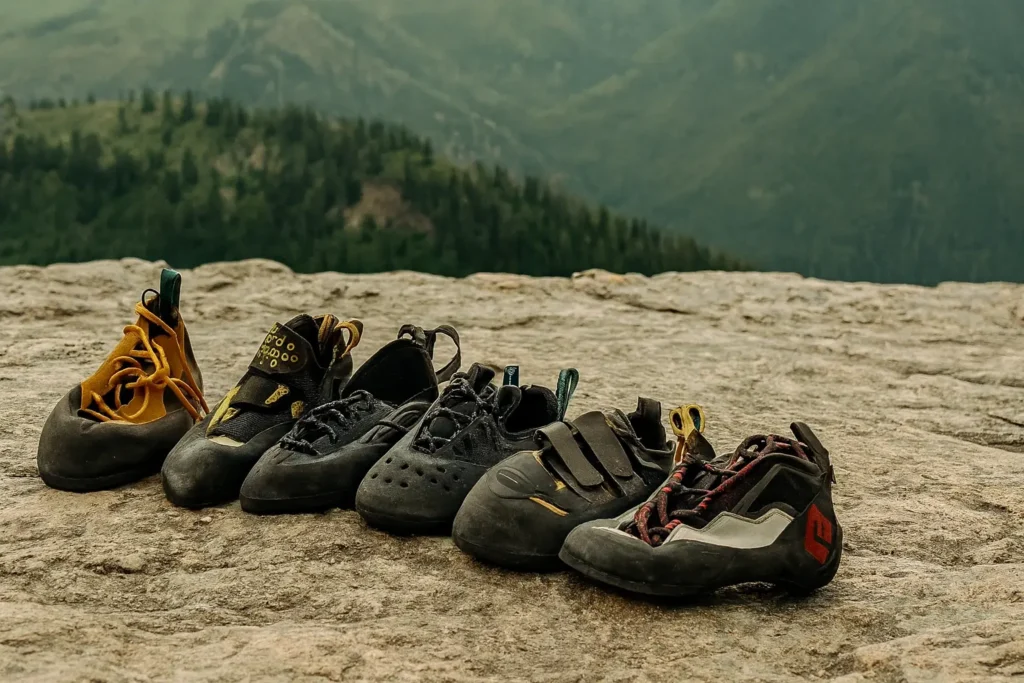
Our testing was slow and detailed. Every shoe was worn for several climbing sessions and compared side by side with others. We looked closely at the fit, heel shape, rubber quality, and toe strength. We climbed in them on slabs, vertical routes, overhangs, and cracks to understand how each shoe behaved under pressure. This one-by-one testing approach helped us remove the shoes that looked promising but did not deliver real performance during climbing.
From all the shoes we reviewed, a few clearly stood out. The La Sportiva Katana Lace performed beautifully on almost every type of route. The La Sportiva TC Pro remained unbeatable for crack and trad climbing. The Scarpa Drago impressed us with sensitivity and steep climbing control. The Black Diamond Momentum stayed strong as a reliable option for gym climbers. We also found excellent value in the La Sportiva Tarantulace and the La Sportiva Finale. For steep sport climbing, the La Sportiva Solution Comp proved to be one of the strongest performers of the year.
No matter your climbing style or skill level, this list includes shoes you can trust. These eight models were chosen because they performed better, lasted longer, and stayed comfortable through many climbing sessions. Everything in this guide is based on real hands-on climbing experience, so you can choose your next pair with full confidence.
The Best Climbing Shoes Reviews
When you are searching for the right climbing shoes, the perfect pair can completely change your performance on the wall. Good climbing shoes should give you secure edging, a power, steady grip sensitivity for precise foot placements and enough comfort to keep climbing longer. The best models help you trust your feet on tiny holds, support your toes during hard moves, and stay responsive whether you climb indoors or outside. Our top choice is the La Sportiva Katana Lace because it delivers strong edging, reliable control, and a balanced mix of comfort and performance for all types of routes.
Related: Men’s Climbing Shoes
Related: Women’s Climbing Shoes
Top Picks for Best Climbing Shoes
Best Overall Climbing Shoe
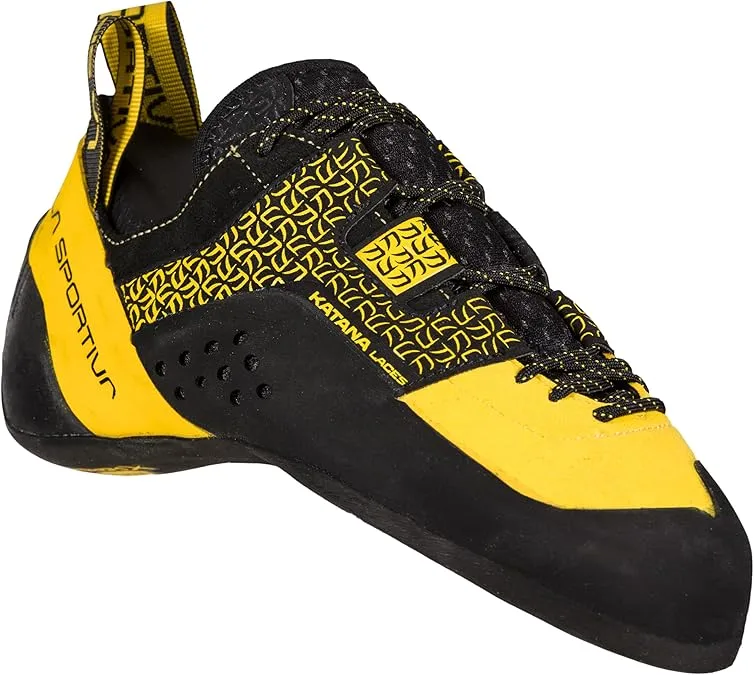
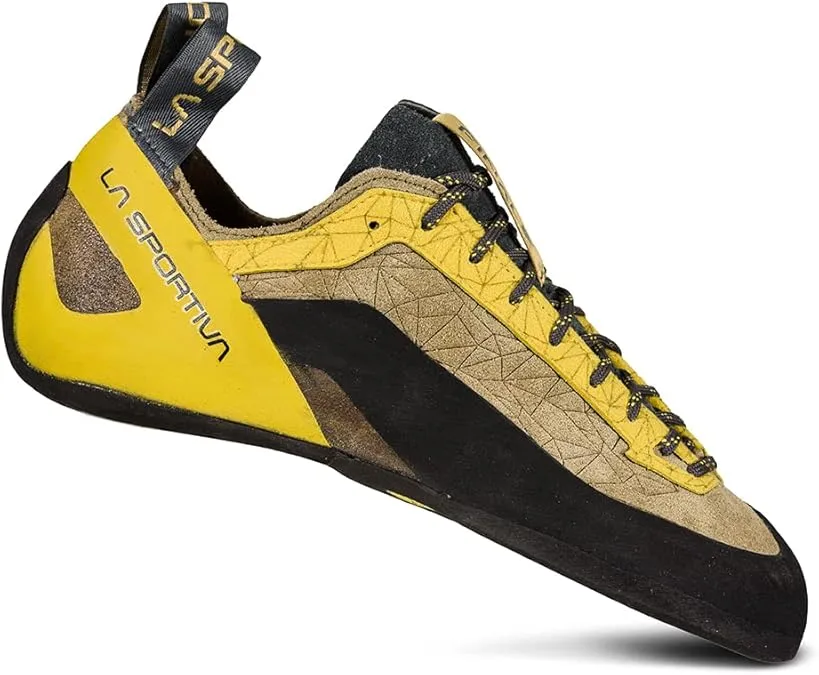
La Sportiva Katana Lace
Specifications
- Upper material: microfiber and leather
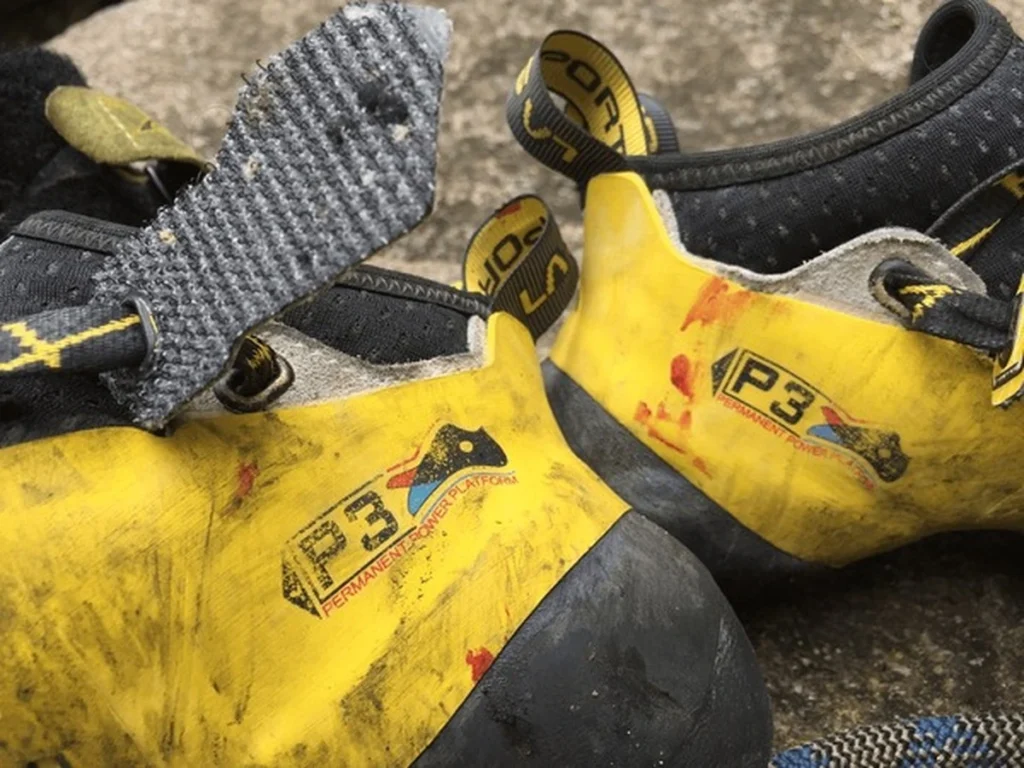
- Midsole: LaspoFlex platform with P3 support
- Outsole: Vibram XS Edge rubber in a four millimeter thickness
- Closure system: lace up
- Profile: slight downturn with moderate asymmetry
- Weight: about eight point eight ounces per shoe, depending on size
REASONS TO BUY
- Excellent edging strength on tiny holds
- Comfortable enough for longer sessions
- Very stable platform for technical face climbs
- Strong heel fit that works well for heel hooks
- Durable build that lasts through heavy use
REASONS TO AVOID
- Less sensitivity than soft climbing shoes
- A narrow fit may not suit wide feet
The La Sportiva Katana Lace is one of the most reliable performance climbing shoes available today. It is designed for climbers who want strong edging, support, stable footwork, and a precise fit on technical terrain. The shoe has a slightly downturned profile that allows it to handle vertical routes and overhangs with confidence while remaining comfortable enough for longer sessions. Many climbers choose it as their main all-around shoe because it performs well in a wide range of climbing styles.
During testing, the Katana Lace stood out for its consistency on small footholds. The stiff midsole gives the shoe enough structure to hold its shape even when standing on tiny edges. This makes it especially useful for sport climbing, face climbing, and any route that demands careful foot placements. It also handles cracks surprisingly well, thanks to its supportive upper, which protects the top of the foot without feeling bulky.
Best Shoe for Trad and Crack Climbing
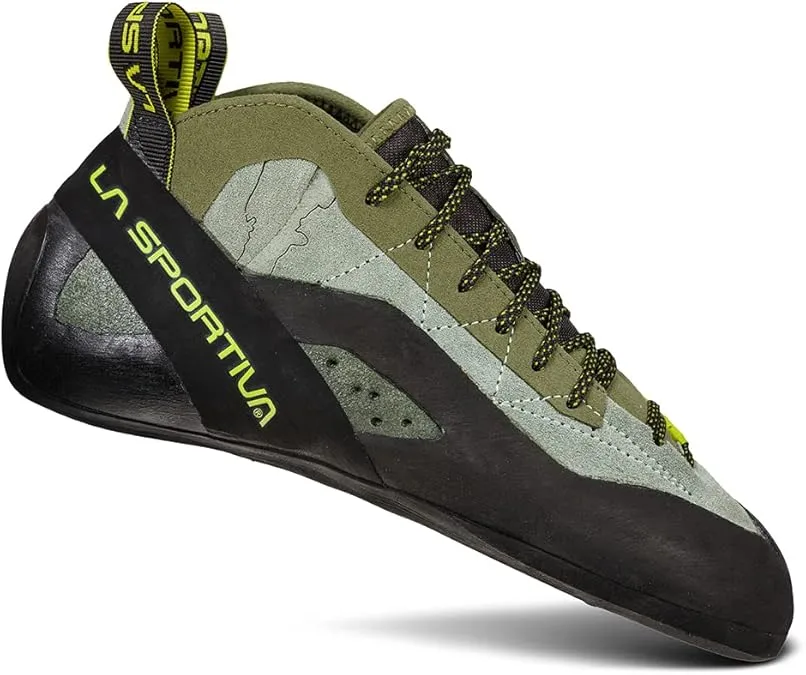
La Sportiva TC Pro
Specifications
- Upper material: leather
- Midsole: LaspoFlex platform with supportive structure
- Outsole: Vibram XS Edge rubber in a four millimeter thickness
- Closure system: lace up
- Profile: flat shape designed for comfort and protection
- Weight: about nine ounces per shoe, depending on size
REASONS TO BUY
- Outstanding performance in crack climbing
- Excellent support for long multi-pitch routes
- High ankle coverage protects during jams
- Very stable edging ability on technical face climbs
- Comfortable for all-day use
REASONS TO AVOID
- Not ideal for steep overhanging climbing
- Less sensitivity than soft shoes
The La Sportiva TC Pro is one of the most respected climbing shoes for crack climbing, trad climbing, and long multi-pitch days. It was built for protection and stability in demanding terrain where comfort and support matter as much as precision. The high cut design adds protection around the ankles, which makes it easier to jam into cracks without feeling sharp edges or rough surfaces. For climbers who spend long hours on vertical walls or granite cracks, this shoe quickly becomes a dependable partner.
In testing, the TC Pro showed impressive control on thin edges and small footholds. The stiff platform helps your foot stay steady when you press into tiny holds or move through delicate face sequences. What makes this shoe special is that it provides this level of performance without sacrificing comfort. Even during long climbs, the shoe maintains a supportive feel that reduces foot fatigue. This balance of comfort and power is why many climbers consider it the top choice for long trad routes and technical crack systems.
Best for Beginners & Tight Budgets
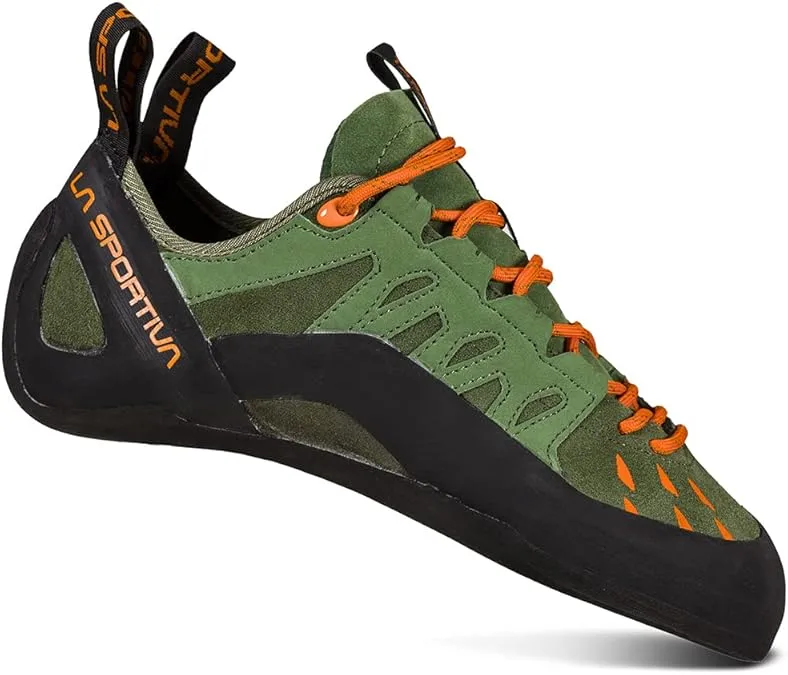
La Sportiva Tarantulace
Specifications
- Upper material: leather
- Midsole: supportive yet flexible design
- Outsole: sticky rubber in a five-millimeter thickness
- Closure system: lace up
- Profile: neutral shape for comfort
- Weight: about eight ounces per shoe, depending on size
REASONS TO BUY
- Very comfortable for beginners and long sessions
- Great value with strong durability
- Easy break-in period
- Neutral fit suitable for learning proper technique
- Breathable upper for gym use
REASONS TO AVOID
- Not suited for advanced edging or steep climbing
The La Sportiva Tarantulace is one of the most popular choices for new climbers because it offers comfort value and dependable performance without feeling harsh or overly tight. It is designed to help beginners build confidence on the wall by giving them a secure footing and a relaxed fit that does not cause unnecessary pain. The neutral profile makes it very approachable for someone who is still learning foot placement and basic climbing technique. Many climbers keep this shoe as their first pair because it feels friendly right out of the box.
During testing, the Tarantulace performed well on gym walls and moderate outdoor routes. It has a soft, flexible feel that allows the foot to move naturally without forcing an aggressive shape. The rubber provides enough grip to support new climbers on edges and simple slabs while still being forgiving on long sessions. The shoe also breathes well, which is especially helpful for beginners who spend extended time practicing in warm indoor gyms.
Best for Rock Climbing Shoes
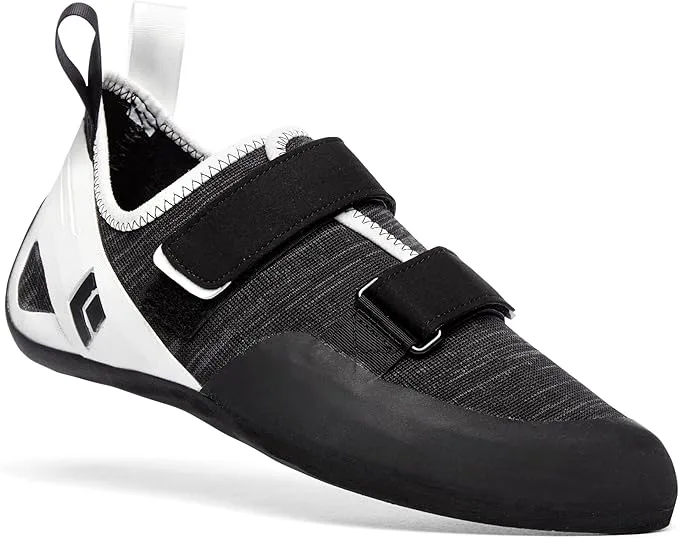
BLACK DIAMOND Men’s Momentum
Specifications
- Upper material: engineered knit fabric
- Midsole: soft, flexible platform
- Outsole: sticky climbing rubber in a four-millimeter thickness
- Closure system: velcro straps
- Profile: flat neutral shape
- Weight: about seven point eight ounces per shoe, depending on size
REASONS TO BUY
- Very breathable and comfortable upper
- Great fit for beginners and casual climbers
- Easy to put on and take off
- Affordable with strong durability for gym use
- Neutral shape suitable for long sessions
REASONS TO AVOID
- Not designed for steep or advanced climbing
- Lower edging power compared to stiff shoes
The Black Diamond Momentum is a comfortable, dependable, and budget-friendly climbing shoe that works especially well for gym climbers and new climbers who want an easy fit. It is built with a soft knit upper that allows the foot to breathe, which is a big advantage during long indoor sessions. The flat profile and relaxed design make it simple to wear for extended periods without the usual discomfort that many climbing shoes create. This combination of comfort and usability has made the Momentum a very popular choice around the world.
In testing, the Momentum offered solid performance for beginners learning foot placement and balance. The shoe feels forgiving yet stable enough to support common gym movements, including edging on medium footholds and smearing on large volumes. It does not force the foot into an aggressive shape, and the knitted material provides a flexible fit that adapts easily to different foot types. Because of this, the Momentum feels more like a comfortable training shoe than a strict performance tool, which suits new climbers perfectly.
Sensitive Climbing Shoe
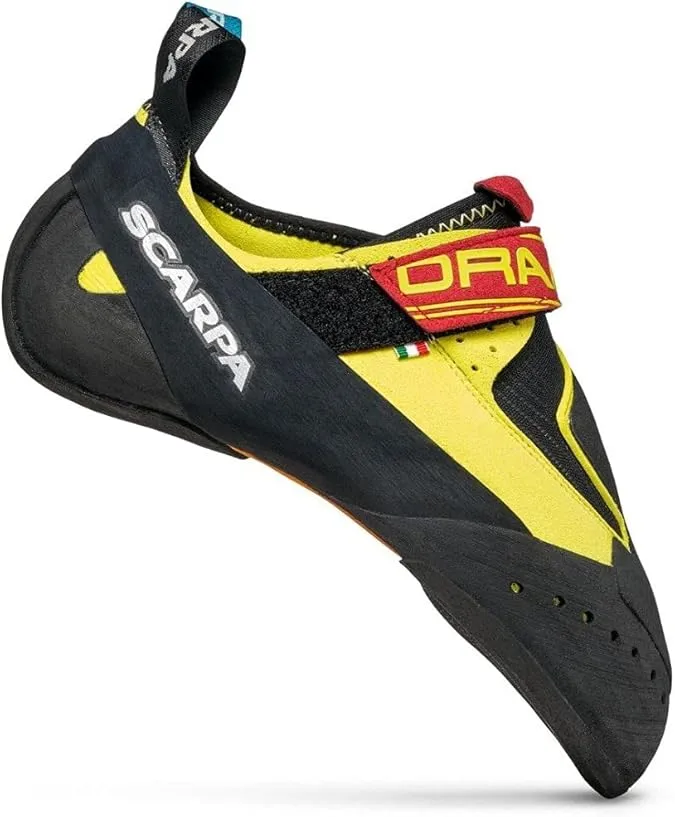
SCARPA Drago Rock
Specifications
- Upper material: microfiber
- Midsole: minimal structure for high sensitivity
- Outsole: sticky rubber in a three-and-a-half millimeter thickness
- Closure system: velcro strap and slipper combination
- Profile: aggressive downturn with high asymmetry
- Weight: about seven ounces per shoe, depending on size
REASONS TO BUY
- Excellent sensitivity for steep climbing
- Powerful toe hooking and heel hooking ability
- Soft, flexible feel that adapts to the wall
- Great choice for bouldering and competition-style climbing
- Lightweight and comfortable for short, intense sessions
REASONS TO AVOID
- Not ideal for edging on tiny holds
- Less supportive for long climbs
The Scarpa Drago is a high-performance climbing shoe built for climbers who want maximum sensitivity and control on steep and technical routes. It has a soft, flexible feel that lets you sense even the smallest features on the wall, which is why it is loved by boulderers and sport climbers who rely on precise foot placements. The slipper-like design hugs the foot closely and creates a secure connection that feels powerful on overhangs and dynamic moves. For advanced climbers, the Drago delivers a level of responsiveness that makes difficult climbing feel more controlled.
During testing, the Drago impressed with its ability to grip small holds and adjust to irregular surfaces. The soft rubber molds well to features and gives excellent performance on toe hooks and heel hooks. The shoe also shines on indoor competition-style problems, where large volumes and complex movement require high sensitivity. Climbers appreciated how easy it was to feel the wall through the shoe, which allowed for more intuitive footwork.
Best Value for a Trad Shoe
Black Diamond Aspect
Specifications
- Upper material: leather
- Midsole: stiff, supportive platform
- Outsole: durable climbing rubber
- Closure system: lace up
- Profile: flat shape built for cracks and long routes
- Weight: about nine ounces per shoe, depending on size

REASONS TO BUY
- Excellent performance in crack climbing
- Strong edging support on small holds
- Comfortable for long multi-pitch days
- Durable construction built to last
- Stable fit that protects the foot during jams
REASONS TO AVOID
- Not suitable for steep or overhanging climbing
- Lower sensitivity compared to soft shoes
The Black Diamond Aspect is designed for climbers who want a dependable and durable shoe for trad climbing, crack climbing, and long outdoor sessions. It offers a supportive feel that helps the foot stay steady inside cracks and on small edges. The shape is comfortable enough for long hours on the wall, which makes it a strong choice for climbers who value both stability and all-day wear. The shoe has a balanced design that keeps your foot secure without forcing an aggressive position, and this makes it ideal for classic trad routes and vertical faces.
During testing, the Aspect performed very well in cracks where the flat profile and protective upper allowed for solid jams without discomfort. The shoe has a stiff platform that gives reliable edging power on technical terrain. It also holds its shape nicely, which is important when climbing long pitches or placing your foot repeatedly in the same crack size. The overall feel is supportive, steady, and built for endurance rather than short, explosive moves.
Well-Rounded Climbing Shoe
La Sportiva Finale
Specifications
- Upper material: leather
- Midsole: medium stiffness for balanced support
- Outsole: Vibram climbing rubber in a five-millimeter thickness
- Closure system: lace up
- Profile: neutral shape suited for all-around use
- Weight: about eight point five ounces per shoe, depending on size
REASONS TO BUY
- Very comfortable for long sessions
- Strong edging power for a neutral shoe
- Durable design suitable for heavy use
- Versatile for gym, climbing, sport climbing, and mild trad routes
- Good choice for progressing climbers
REASONS TO AVOID
- Not aggressive enough for steep
- Moderate sensitivity compared
The La Sportiva Finale is a dependable all-around climbing shoe designed for climbers who want comfort, durability, and steady performance across different types of routes. It is a popular choice for both intermediate climbers and beginners who are ready to move beyond entry-level shoes. The Finale offers a balanced feel that works well in the gym and outdoors, making it one of the most versatile options in its range. It provides enough structure for technical climbing yet stays comfortable during long sessions or multi-pitch routes.
During testing, the Finale showed strong edging ability on small footholds while still offering the flexibility needed for smearing and slab climbing. The leather upper softens nicely over time and creates a secure but relaxed fit that many climbers appreciate. The shoe maintains stability without feeling overly stiff, which helps climbers practice precise footwork without discomfort. This balance makes the Finale an excellent everyday shoe for training and moderate climbing.
Best for Steep Roped Climbing
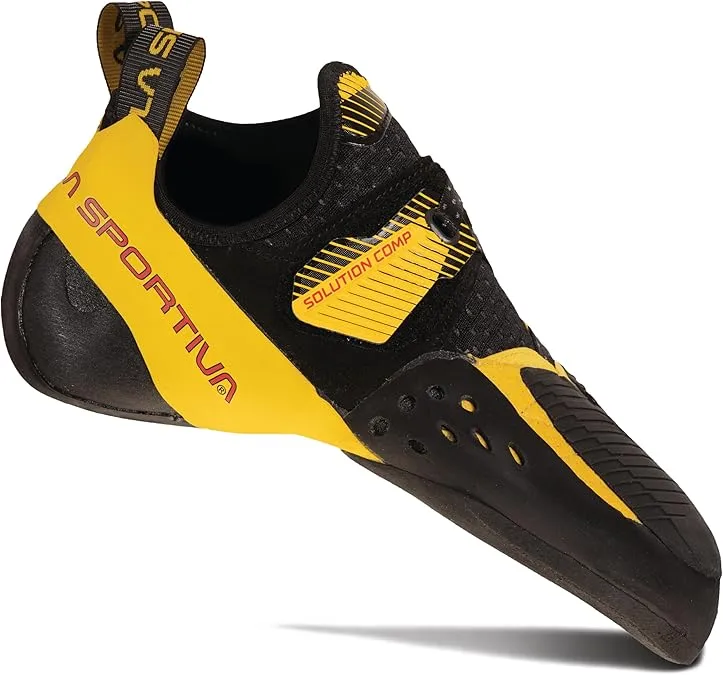
La Sportiva Solution Comp
Specifications
- Upper material: microfiber
- Midsole: soft structure with a focus on sensitivity
- Outsole: sticky rubber in a three-and-a-half millimeter thickness
- Closure system: fast lacing hook and loop strap
- Profile: aggressive downturn with strong asymmetry
- Weight: about seven point five ounces per shoe, depending on size
REASONS TO BUY
- Outstanding performance on steep climbing
- Excellent toe hooking and heel hooking power
- Very sensitive feel for precise movement
- Lightweight and responsive design
- Ideal for competition climbing and hard boulders
REASONS TO AVOID
- Not suitable for long routes or all-day comfort
- Less stable on tiny footholds due to soft build
The La Sportiva Solution Comp is a powerful, high-performance climbing shoe created for steep sport routes, competition-style problems, and advanced movement. It builds on the original Solution design but feels more flexible, lighter, and more precise on modern indoor terrain. The shoe delivers exceptional control on overhangs thanks to its aggressive shape and high-tension heel, which allows climbers to pull on footholds with strength and stability. For climbers who want a shoe that supports dynamic moves and technical toe work, the Solution Comp stands out as one of the top options.
During testing, the Solution Comp performed incredibly well on steep walls where precise foot placement and strong hooking ability are essential. The shoe has a generous amount of rubber over the toe, which makes toe hooks feel secure and powerful. The heel is also redesigned to fit snugly and deliver a consistent grip on heel hooks. Climbers noted that the shoe feels very connected to the wall and provides clear feedback, which is important for advanced indoor and outdoor projects.
How We Tested the Best Climbing Shoes
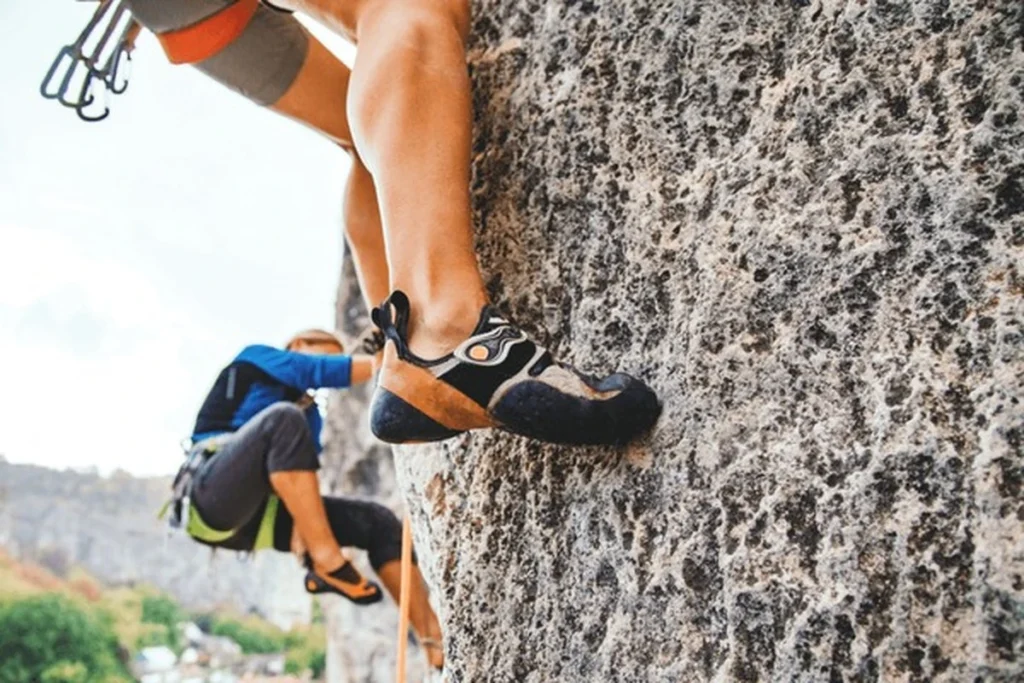
To choose the best climbing shoes, we spent months testing more than fifty different models across a wide range of climbing styles. Each shoe was used in real climbing sessions, both indoors and outdoors, so we could understand how it performed in practical situations. We climbed on slabs, vertical walls, overhangs, cracks, and modern gym volumes to see how well each shoe handled different demands. Every pair was evaluated by multiple climbers with different skill levels to make sure the results were fair and consistent.
Our testing focused on five main performance areas. For comfort, we wore each shoe on long sessions to see how it felt after hours of climbing. For edging, we tested how securely the shoe stood on tiny footholds using both vertical and slightly overhung routes. For smearing, we checked how well the rubber gripped smooth surfaces and slab walls. For crack climbing, we used shoes in a variety of crack sizes to judge protection and support. For pulling power, we looked at toe hooks, heel hooks, and the overall control on steep climbing.
We rate climbing shoes on five performance metrics:
- Comfort
- Edging
- Smearing
- Crack Climbing
- Pulling
Climbing Shoe Buying Advice
What to Look for in a Beginner Shoe
A beginner shoe should feel comfortable and supportive without squeezing your foot too tightly. It is better to start with a neutral or slightly curved shape because it helps you learn proper foot placement without forcing aggressive positions. Beginners also benefit from a shoe that is easy to put on, durable enough for regular gym use, and soft enough to allow natural movement. The goal is to give new climbers confidence and comfort so they can focus on technique rather than pain.
Uppers: Leather vs. Synthetic
Leather uppers tend to stretch over time, which allows the shoe to mold to the shape of your foot. This can create a comfortable personalized fit, especially for longer climbs. Synthetic uppers do not stretch as much and keep their shape more consistently, which is helpful for climbers who want a performance-based fit. Both materials work well, but your choice depends on whether you want long-term comfort or a more stable performance feel.
Soft vs. Stiff
Soft shoes offer great sensitivity, which helps you feel the surface beneath your foot. They are ideal for steep boulders and dynamic indoor climbing. Stiff shoes give you more support, especially when standing on small edges or climbing long face routes. Your choice depends on the style you climb most often. Soft shoes help with flexibility and precise movement, while stiff shoes give power and stability on technical terrain.
Gym vs Outdoor Climbing Shoes
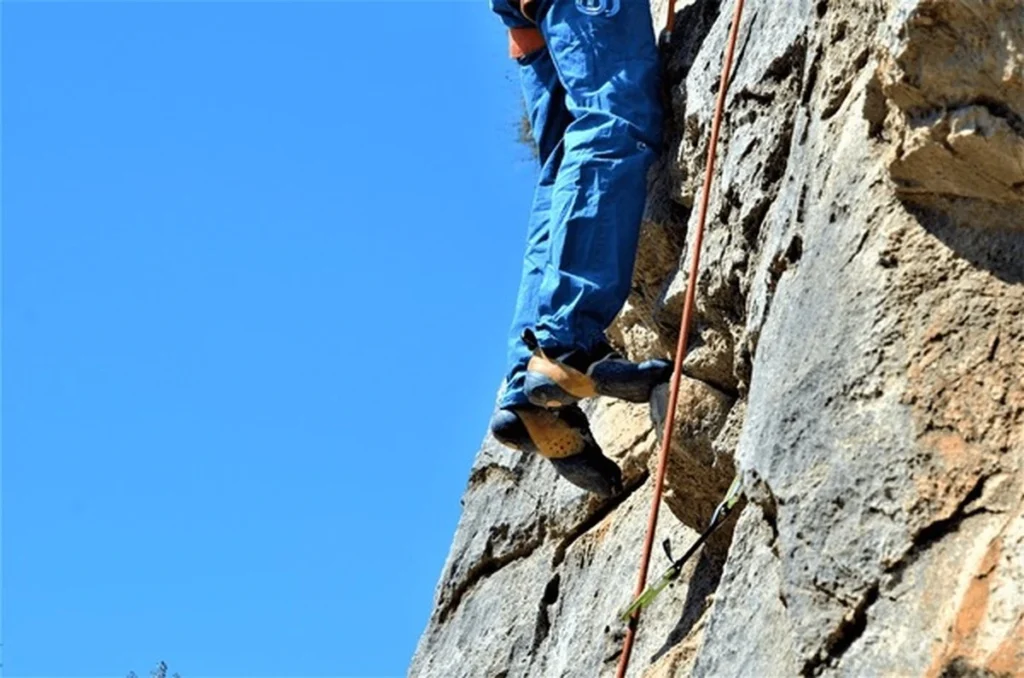
Gym shoes are usually softer, more breathable, and easier to wear for long training sessions. They are made for frequent use and comfort on big holds and volumes. Outdoor shoes often need more support because real rock has sharper edges and smaller footholds. Outdoor routes may also require more durable materials. Climbers who spend time in both settings often use one pair for training in the gym and another for harder outdoor projects.
Rubber
Rubber plays a huge role in how well a shoe grips the wall. Softer rubber gives excellent friction and helps with smearing and steep climbing. Harder rubber lasts longer and provides better support on small edges. A balanced rubber gives both grip and durability. Choosing the right rubber depends on whether you want sensitivity, power, or long-lasting performance.
Closures: Lace, Velcro, and Slip-on
Laces offer the most precise fit because you can adjust the tightness across the entire foot. Velcro straps are quick to put on and take off, which is perfect for bouldering sessions with frequent breaks. Slip-on shoes are lightweight, sensitive, and great for training or competitions, but they can feel tight for some climbers. The best closure system is the one that matches your climbing routine and comfort preferences.
Men’s and Women’s Versions
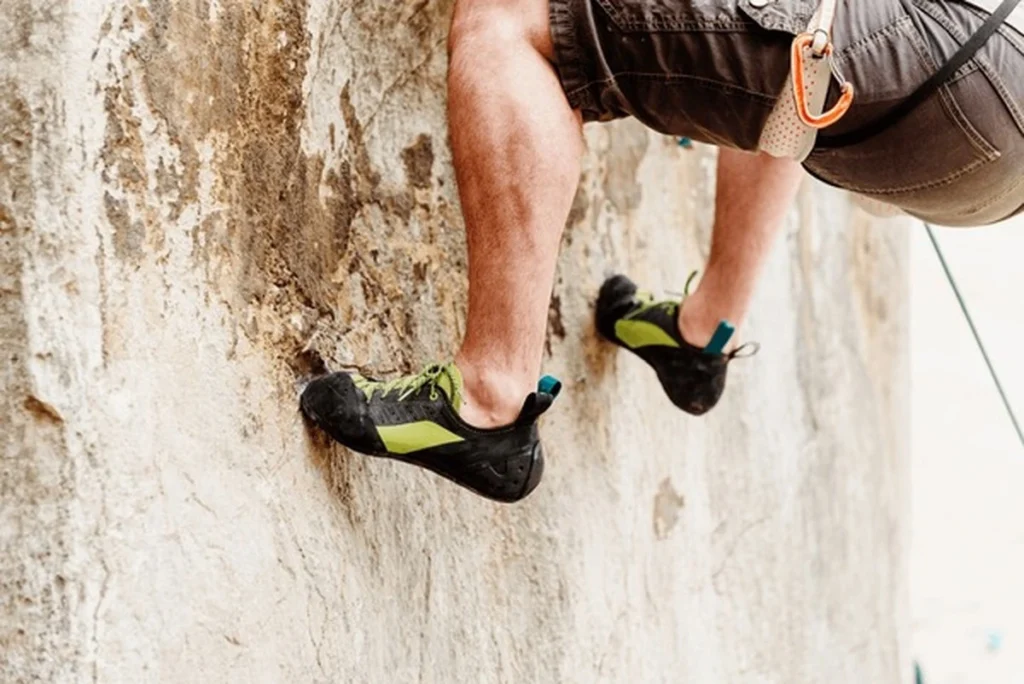
Men and women often have different foot shapes, so many shoes come in both versions. Women’s models usually have a narrower fit, a lower volume, and a smaller heel cup. Men’s models often have more volume and a wider forefoot. Choosing the version that matches your foot shape can make a big difference in comfort and performance.
Sizing: Comfort vs. Performance
A comfortable fit is better for beginners, long routes, and all-day climbing. Your toes should touch the front but not feel painfully curled. A performance fit is tighter and gives more precision on small footholds, but it is not meant for long sessions. Climbers often size differently depending on the type of climbing they plan to do. The right size should feel snug, secure, and supportive without causing sharp pain.
Why You Should Trust Outdoor Searcher
Outdoor Searcher is built on real testing, real climbing experience, and honest evaluations. Every product we review is used in practical climbing environments, so our recommendations come from actual performance rather than marketing claims. Our team includes climbers with different skill levels, which means each shoe is tested from multiple perspectives. This helps us understand how well a product works for beginners, intermediate climbers, and advanced athletes.
We also compare each shoe against many others in the same category to see how it performs in areas like comfort, edging sensitivity, and durability. Our process is slow, careful, and focused on long-term use, not quick impressions. We do not allow companies to influence our rankings, so every review remains independent and unbiased. When we say a shoe performs well, it is because we have tested it thoroughly on real walls and real climbs.
Performance Analysis and Test Results:
Comfort
Comfort is one of the most important factors, especially for long sessions in the gym or long days on real rock. During testing, we paid close attention to how each shoe felt after hours of climbing rather than just a few moves. Some shoes softened nicely over time and created a relaxed, secure fit, while others remained tight and performance-focused. A comfortable shoe should allow you to climb without distraction and without painful pressure points. Shoes with supportive midsoles and breathable uppers generally performed best in this category.
Edging
Edging tests showed clear differences between stiff shoes and softer models. Stiff shoes offered strong support when standing on tiny footholds and made it easier to push through technical vertical routes. They maintained shape under pressure and gave climbers a confident, stable base. Softer shoes struggled in this area, especially on sharp or micro edges. The best performers allowed climbers to apply precise power through the toes without rolling or bending.
Smearing
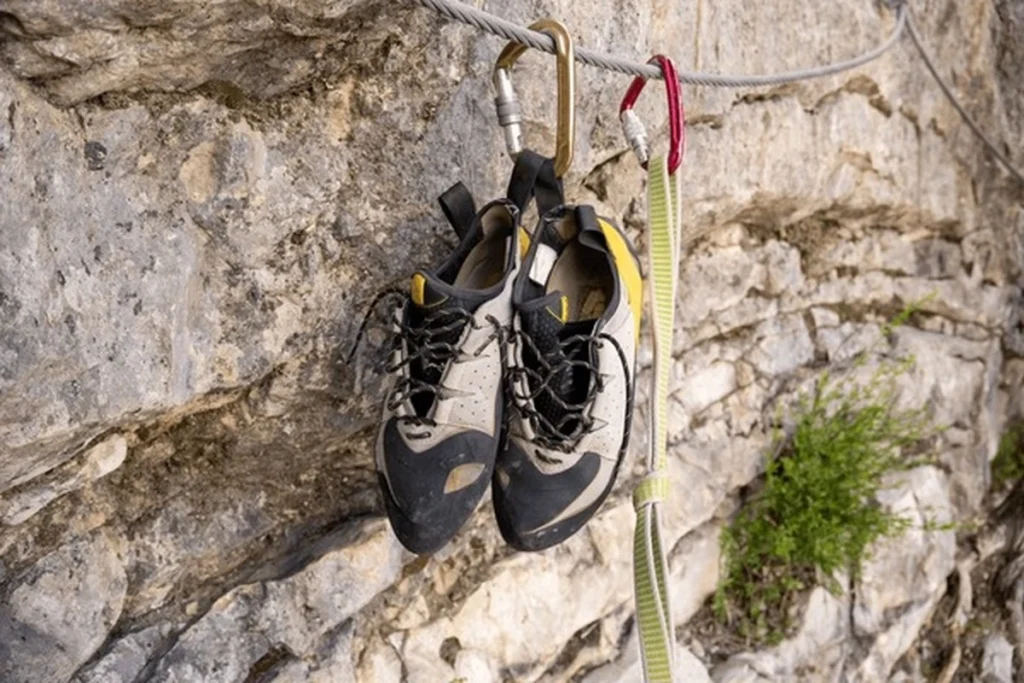
For smearing, we looked at how well the shoe gripped smooth walls, slabs, and large indoor volumes. Soft rubber and flexible soles gave the best results because they allowed the shoe to mold to the surface. Climbers using these shoes could trust their feet even on low-angle walls where friction mattered more than structure. Stiffer shoes performed less consistently on smears because they could not press into the wall as naturally. Overall sensitivity and rubber softness played the biggest roles here.
Crack Climbing
Crack climbing performance focused on protection, stability, and comfort when jamming the foot into different crack sizes. Shoes with a supportive upper, strong toe protection, and flat profiles performed best. These models allowed climbers to twist and press without feeling sharp pain, and they held their shape well inside the crack. Softer or highly aggressive shoes were less effective because they lacked the protection and support needed for repeated jamming. The top-scoring shoes combined comfort with durability and stayed secure even on long cracks.
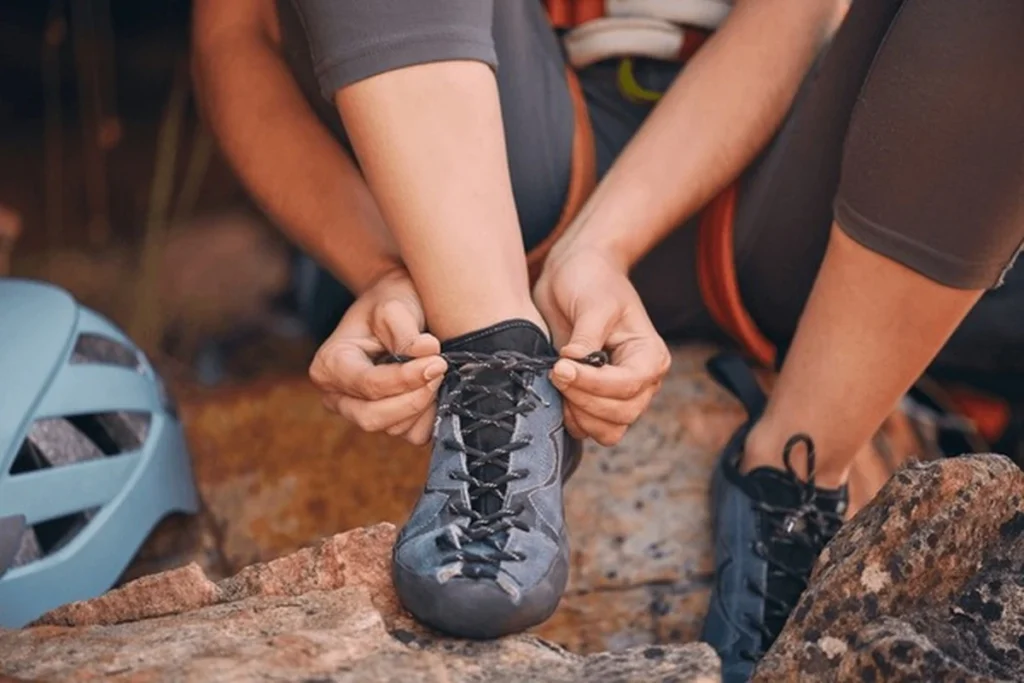
Pulling
Pulling power refers to how well a shoe performs on toe hooks, heel hooks, and steep climbing. Aggressive shoes with rubber reinforcement over the toe and a tight heel cup excelled in this area. They allowed climbers to lock onto holds and generate power through the foot during overhangs and dynamic moves. Softer shoes gave excellent sensitivity but sometimes lacked heel stability. Stiff trad-oriented shoes offered less hooking ability because their shapes were not designed for steep pulling. The best performers delivered strong, reliable tension on both toe and heel hooks.
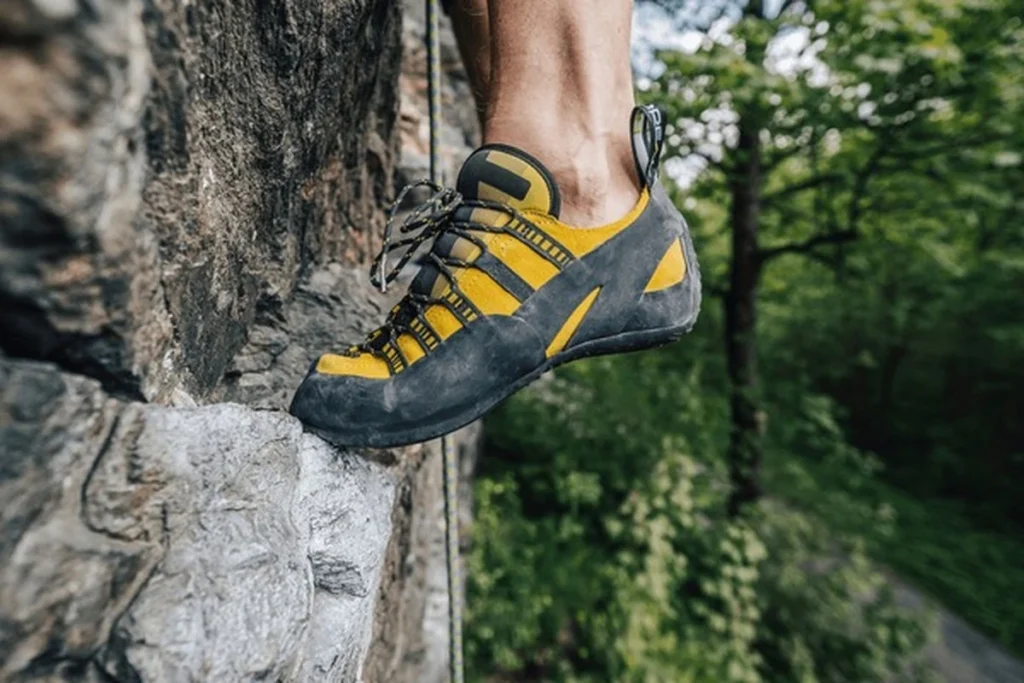
How to Choose Climbing Shoes
Fit and Break-In
Fit matters more than any other feature because a well-fitted shoe helps you climb better, even if it is not the most advanced model. The shoe should feel snug around the toes and midfoot without causing intense discomfort. Your toes may curl slightly, but they should not feel crushed. Some shoes stretch over time, especially leather models, which means the fit becomes more comfortable after a few sessions. Synthetic shoes change very little, so the first fit is usually close to the long-term fit. Allowing a short break in the period helps the shoe soften and adapt to your foot shape.
Intended Use
The right shoe depends on the type of climbing you do most often. If you climb in the gym, a softer shoe with good sensitivity can help with learning technique and working modern style problems. If you climb outdoors on rock, you may need more edging support or durability, depending on the terrain. Trad climbers benefit from flat, comfortable shoes with strong protection for cracks, while sport climbers and boulderers may prefer aggressive models that give power on steep routes. Understanding where and how you climb ensures that your shoe matches your goals and supports better performance.
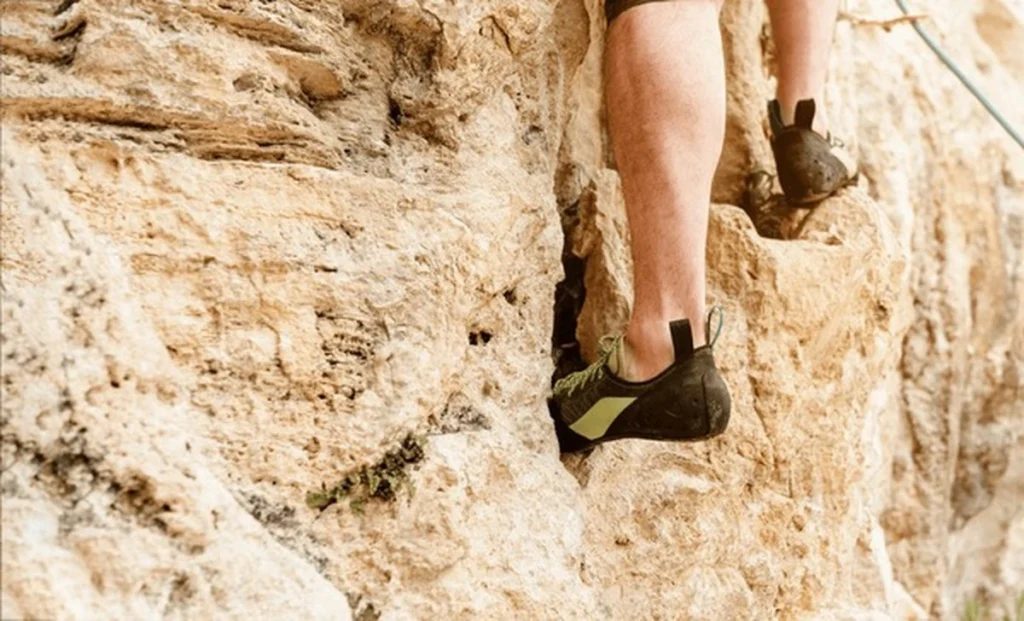
Conclusion
Choosing the best climbing shoe can make a big difference in how confident and comfortable you feel on the wall. Each model in our list was carefully tested to understand its strengths, its fit, and the type of climbing it supports best. Whether you prefer steep boulders, technical face climbs, long trad routes, or simple gym sessions, there is a shoe here that matches your style and experience level. The key is to understand your own needs and pick a shoe that helps you progress without unnecessary discomfort.
The shoes we selected stand out because they offer reliable performance and lasting quality across many climbing situations. Some focus on power and precision, while others prioritize comfort and all-day wear. No matter which option you choose, the most important part is finding a shoe that fits well and supports your goals. With the right pair on your feet, you can climb farther, push harder, and enjoy every move with more confidence.
FAQs
Should climbing shoes feel tight?
Climbing shoes should feel snug enough to give you control and precision, but they should never create sharp pain. A proper fit means your toes sit close to the front of the shoe and may curl slightly, but you should still be able to focus on climbing without constant discomfort. Performance shoes are usually tighter because they help with edging and powerful movements, while beginner shoes are more relaxed to allow comfort during longer sessions
What type of climbing shoes are best for beginners?
Beginner climbers do best with neutral or slightly curved shoes that offer a balance of comfort and support. These shoes help new climbers learn proper foot placement without feeling overwhelmed by aggressive shapes. They are easier to wear for long periods, which is important when practicing in the gym or climbing outdoors for the first time.
How long does it take to break in climbing shoes?
Break-in time depends on the material and design of the shoe. Leather shoes usually stretch and soften after a few climbing sessions, which makes them more comfortable as they adjust to your foot shape. Synthetic shoes change very little, so the fit you feel on day one will stay almost the same over time.
Can one pair of climbing shoes work for both gym and outdoor climbing?
Yes, many climbing shoes work well in both environments. Gym climbing often benefits from softer and more flexible shoes because indoor routes use large holds and volumes. Outdoor climbing can require more support, especially on technical faces or sharp rock. A shoe that sits in the middle, offering both sensitivity and structure, can easily handle both situations.
How do I know when it is time to replace my climbing shoes?
A climbing shoe should be replaced when the rubber becomes thin or begins to show holes, especially near the toe area, where most wear occurs. If the shoe starts to feel slippery on footholds or loses its structure, you will notice a clear drop in performance.
Are aggressive shoes necessary for steep climbing?
Aggressive climbing shoes are designed with a strong downturn and precise toe shape, which makes them excellent for steep walls and overhangs. They allow climbers to pull on footholds and generate power in positions where the foot needs to hook or press hard. While these shoes make steep climbing easier, they are not required for all climbers